How to Use the Seoul Subway: A Step-by-Step Guide for Foreigners
The Seoul subway is one of the best in the world — clean, cheap, punctual, and (this is the part that surprises visitors) entirely usable in English. If you’ve never ridden it, the first time can feel intimidating. It shouldn’t. Here’s the whole thing, step by step, the way I’d walk a friend through it. (Photos are from Itaewon Station on Line 6.)
Step 1: Find the station entrance
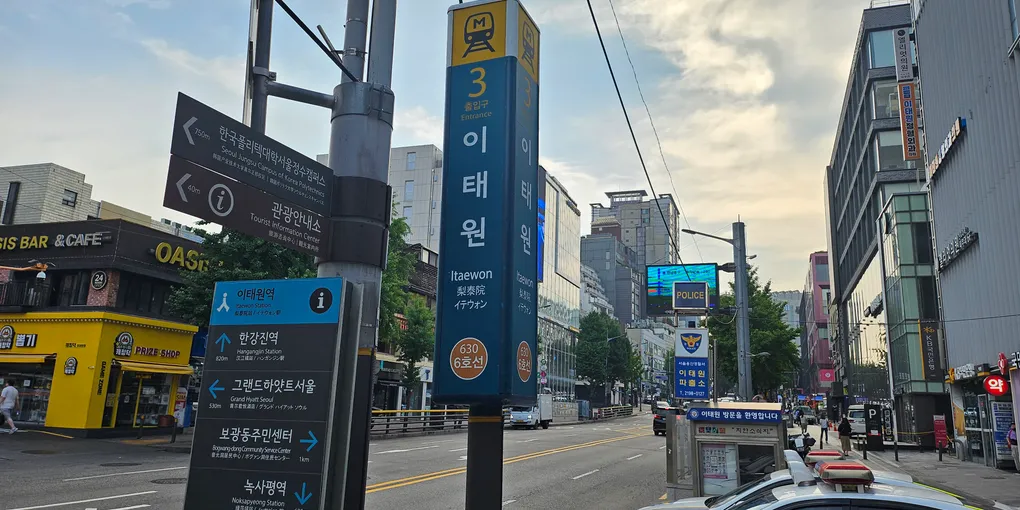
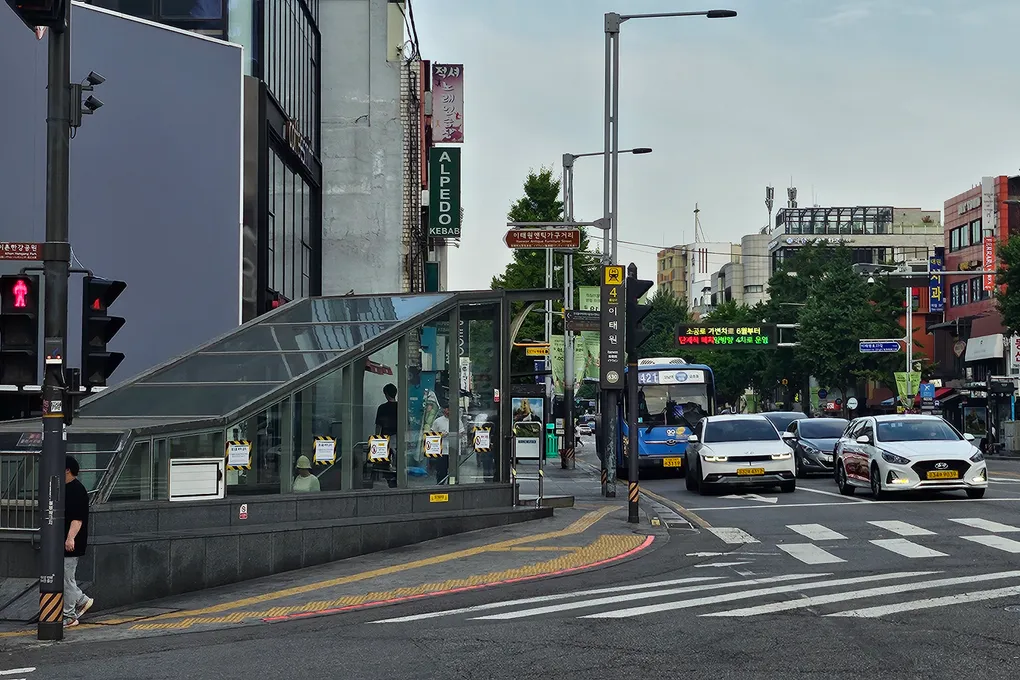
Look for the entrances marked with a number and the subway logo. Big stations have several — they’re all the same station, just different street exits.
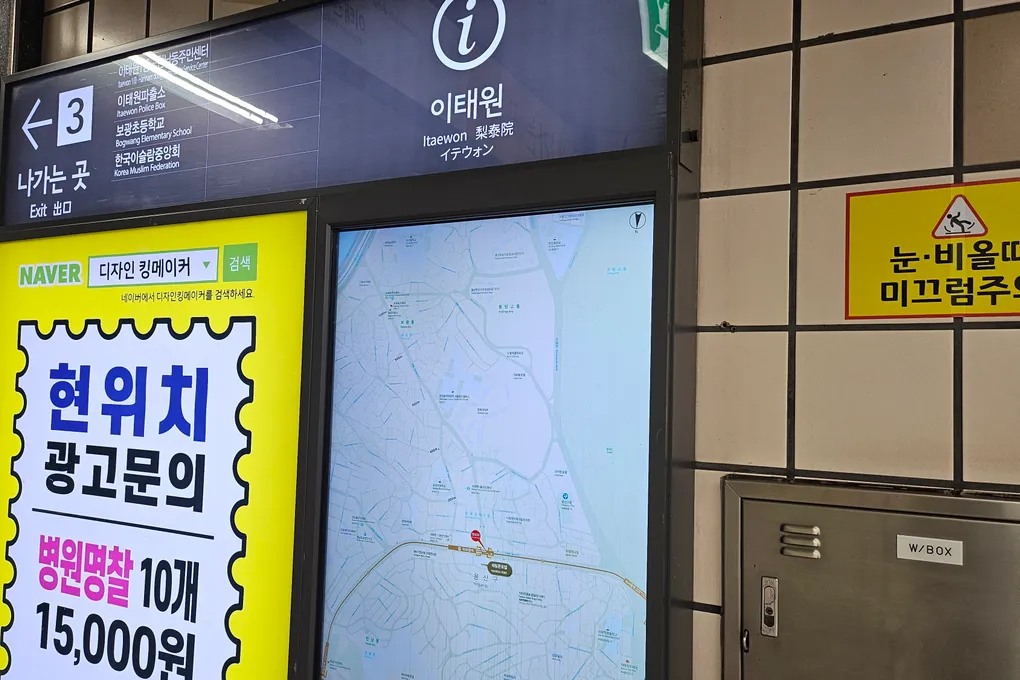
Down below, you’ll see clear signage with the station name in Korean, English, Chinese, and Japanese — plus a map of the area.
Step 2: Get a card or ticket
You have two easy options:
A. T-money card (recommended). A rechargeable transit card. Buy it at any convenience store or a station Ticket Kiosk, load it with cash, and you’re set — it works on subways, buses, and even taxis.
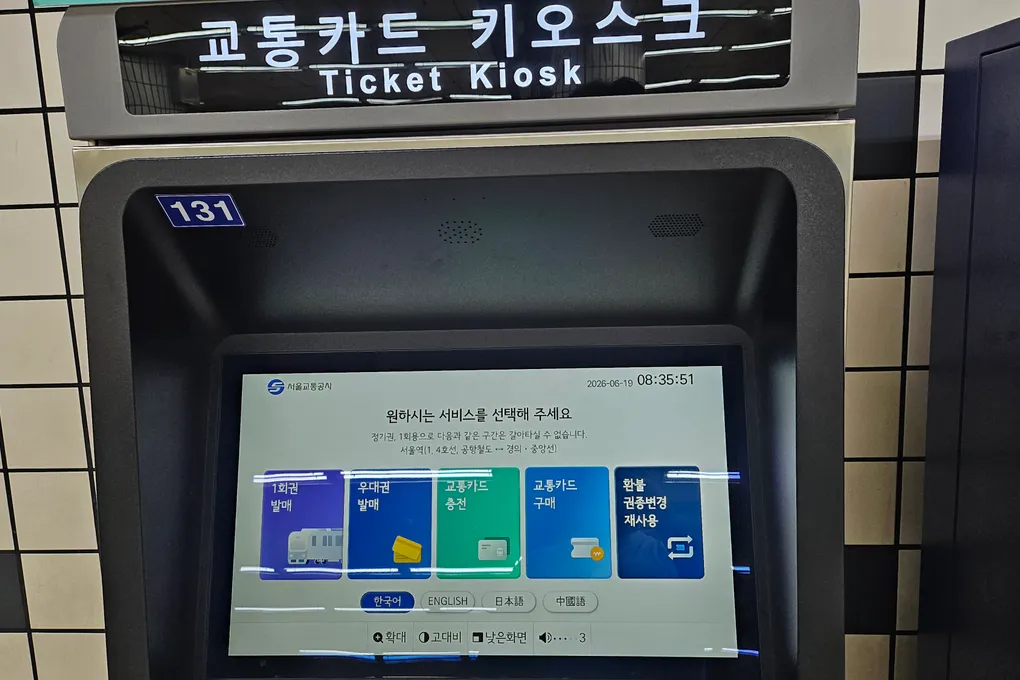
B. Single-journey ticket. If you’d rather not get a card, buy a single ticket at the machine. Crucially, tap “ENGLISH” and the whole menu switches over.
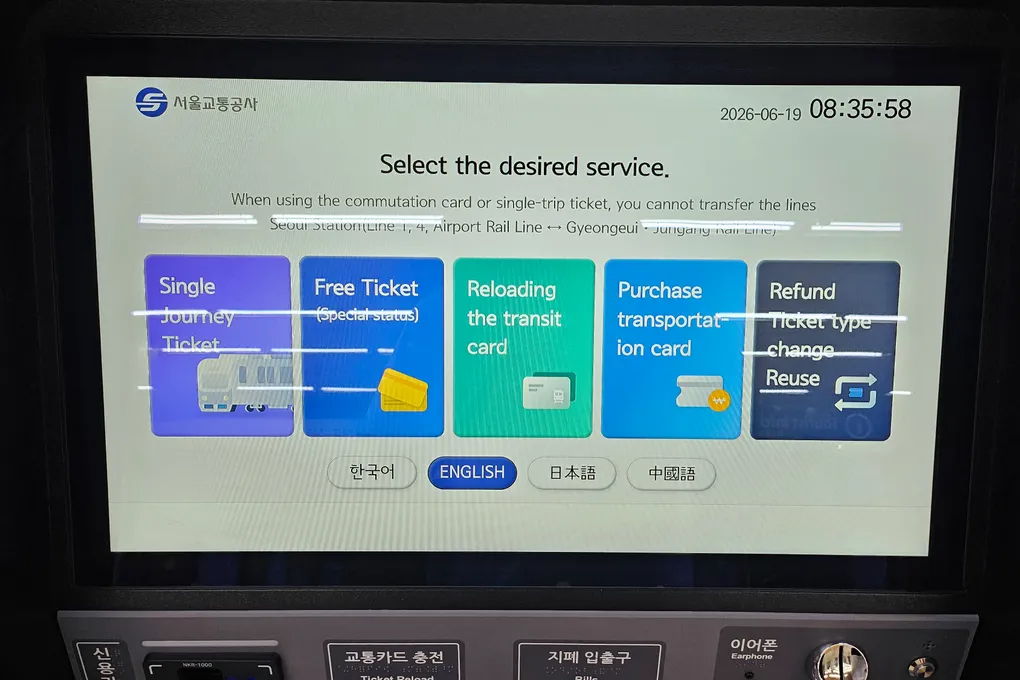
Step 3: Tap in at the gate
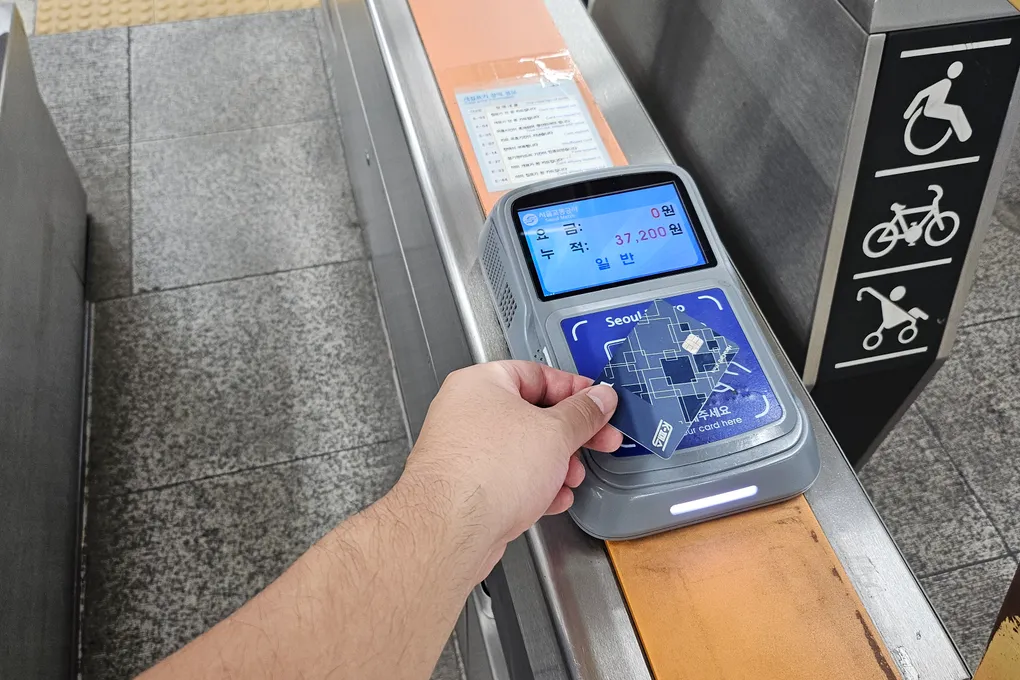
Tap your card flat on the reader at the gate (look for “tag your card here”). The screen shows your fare and remaining balance, the gate opens, and you walk through. That’s it.
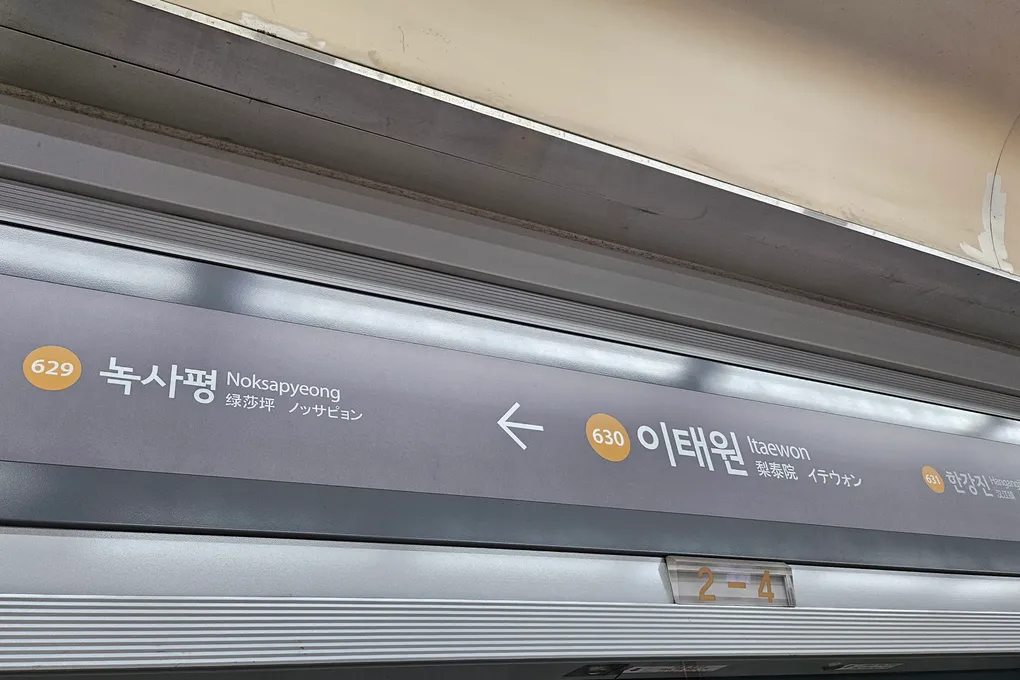
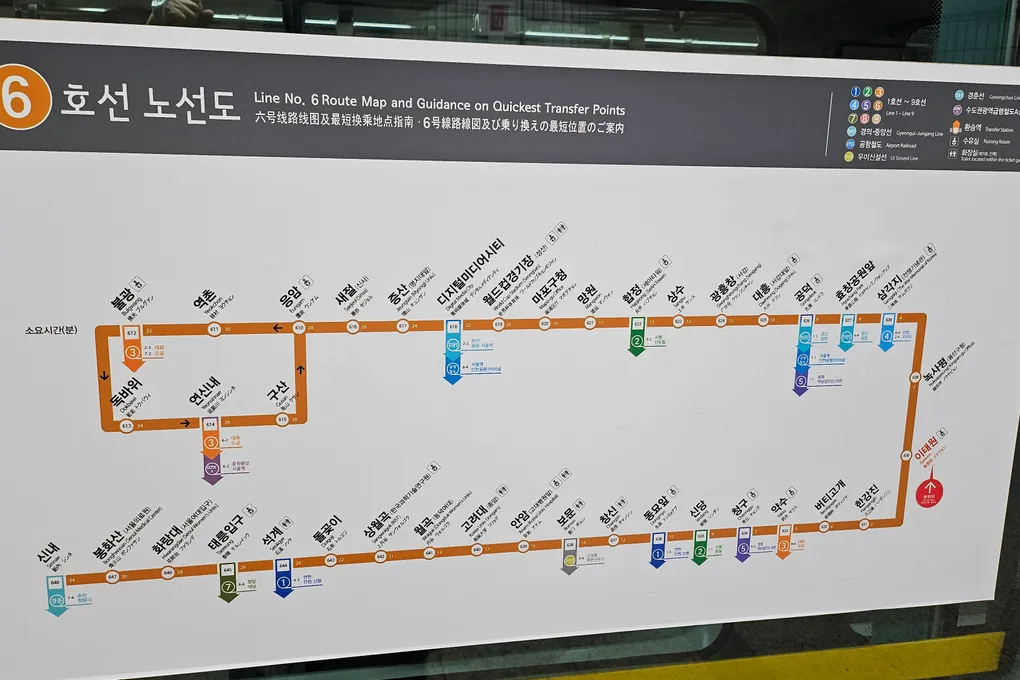
Step 4: Find your line and direction
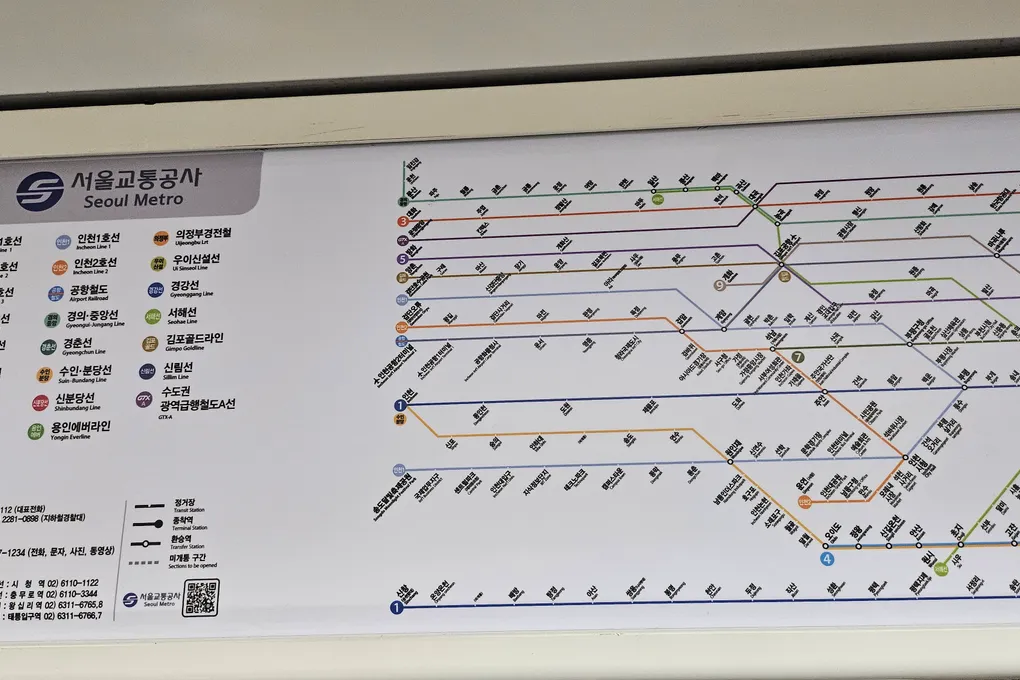
Each line has a number and a color (Itaewon is Line 6, orange). Follow your line’s color. The route map shows every stop; note the direction by the last station on your line.
On the platform, signs tell you the previous and next stations, so you can confirm you’re heading the right way before the train arrives.
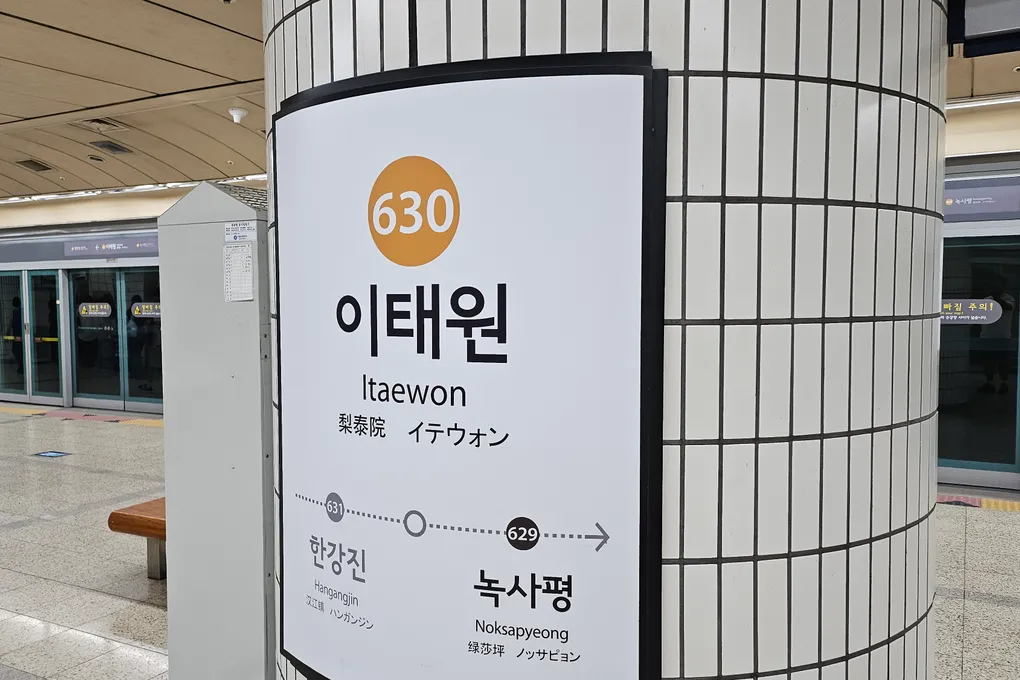
Every station also has a number (Itaewon is 630). Once you know your destination’s number, you barely even need the names.
Step 5: On the train
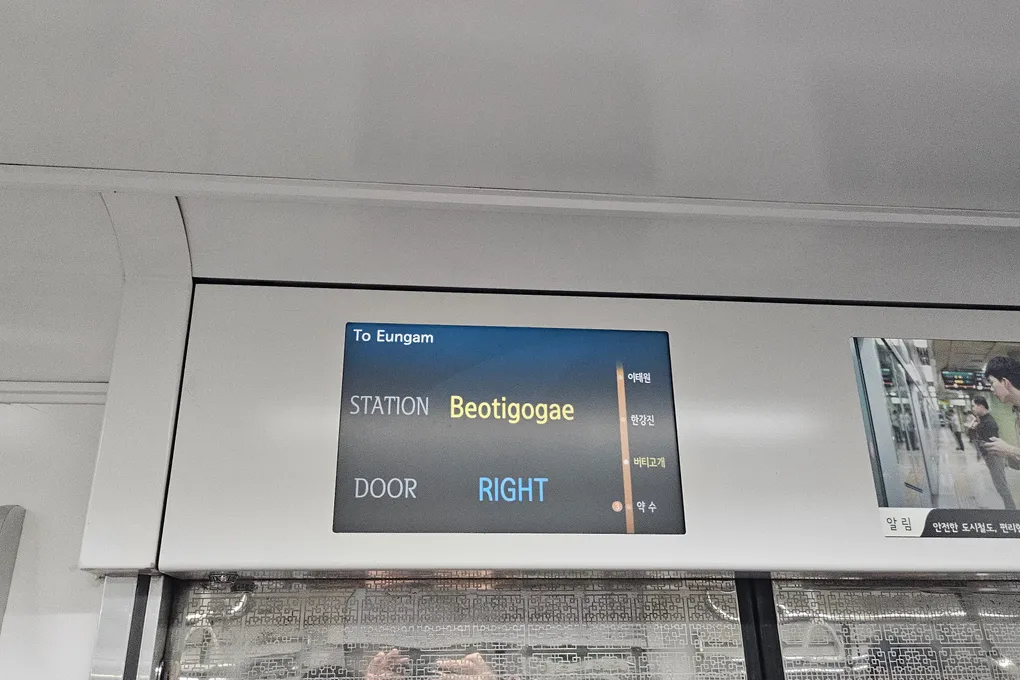
Inside, a display above the door shows the current/next station and which side the doors will open — in English. Listen for the announcements too; they’re in Korean and English.
Step 6: Exit the right way
This is the one thing that trips people up: exits are numbered, and picking the right one matters. The wrong exit can put you across a huge intersection from where you wanted to be.
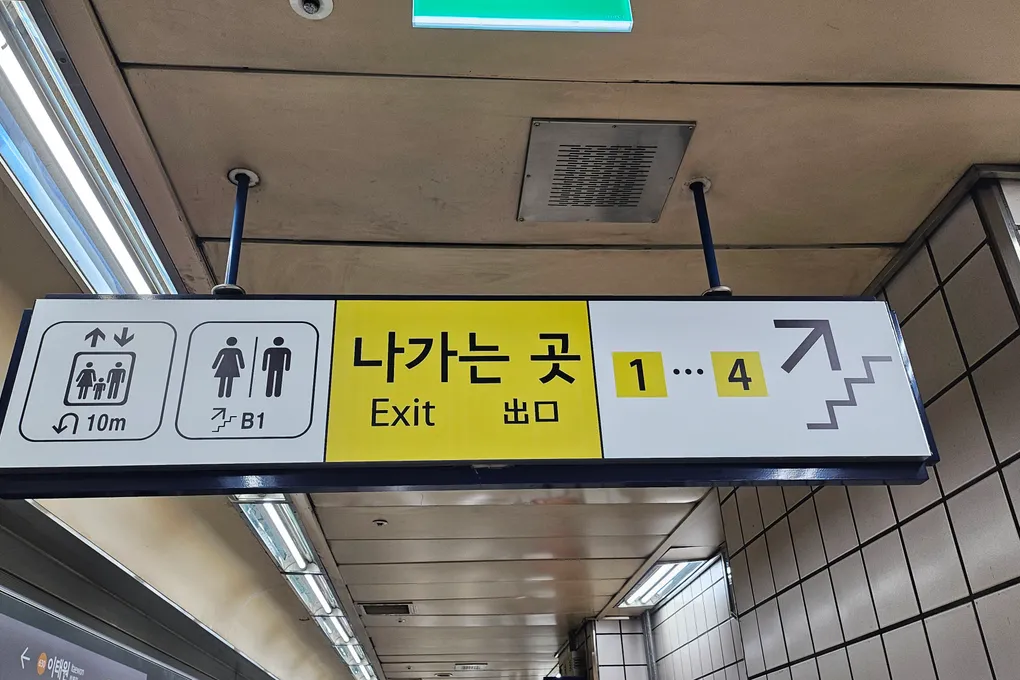
Naver Map or Kakao Map will tell you the best exit number for your destination. Follow that number’s signs up to the street.
Quick tips
- Fare: ~₩1,400–1,500 base, by card. Incredibly cheap.
- Get a T-money card first — convenience stores sell and reload them in minutes.
- Use Naver Map or Kakao Map for routing (Google Maps transit is limited in Korea, but Naver/Kakao are excellent and in English).
- Rush hour (8–9am, 6–7pm) is packed — avoid if you can.
- Keep your card handy — you tap both in and out.
The bottom line
The Seoul subway looks complex but is genuinely one of the easiest in the world for a non-Korean speaker: numbered lines and stations, English everywhere, and a flat, cheap fare. Grab a T-money card, follow the colors and numbers, and mind your exit number. You’ll be zipping around the city like a local by day two.
Frequently asked questions
How much does the Seoul subway cost?
The base fare is around ₩1,400–1,500 for a short trip, paid by transit card. It's one of the cheapest, most efficient subways in the world.
What card do I use for the Seoul subway?
Most people use a T-money card — buy it at any convenience store or station machine and top it up with cash. Single-journey tickets are also sold at station machines (with an English menu).
Can I use a foreign credit card?
Contactless payment is rolling out, but a T-money card is still the easiest and works everywhere. Buy one at a convenience store in minutes.
Is the Seoul subway in English?
Yes. Signs, ticket machines, route maps, and in-train announcements/displays are all in English (plus Japanese and Chinese). It's very foreigner-friendly.
How do I find the right exit?
Exits are numbered. Check which exit number is closest to your destination (signs and Naver/Kakao Map list them) — leaving from the wrong exit can mean a long detour.