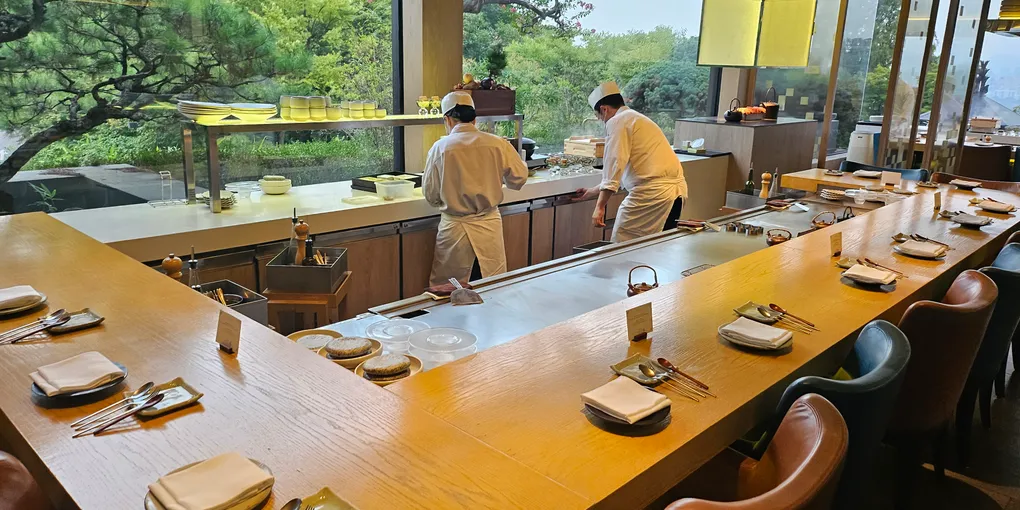
Teppan at Grand Hyatt Seoul: An Honest Look at the ₩260,000 Dinner Course
Teppanyaki restaurants have a reputation problem outside Japan. For a lot of visitors the word means a chef juggling salt shakers and making an onion volcano. Teppan, the teppanyaki counter inside Grand Hyatt Seoul, is not that. It’s a quiet, expensive, seasonal tasting menu that happens to be cooked on a steel griddle thirty centimeters in front of you.
I went for dinner on a holiday evening in September 2026 and paid ₩260,000 per person for the course. Here’s what that actually buys, how to get a table, and the one thing I’d complain about.
The room
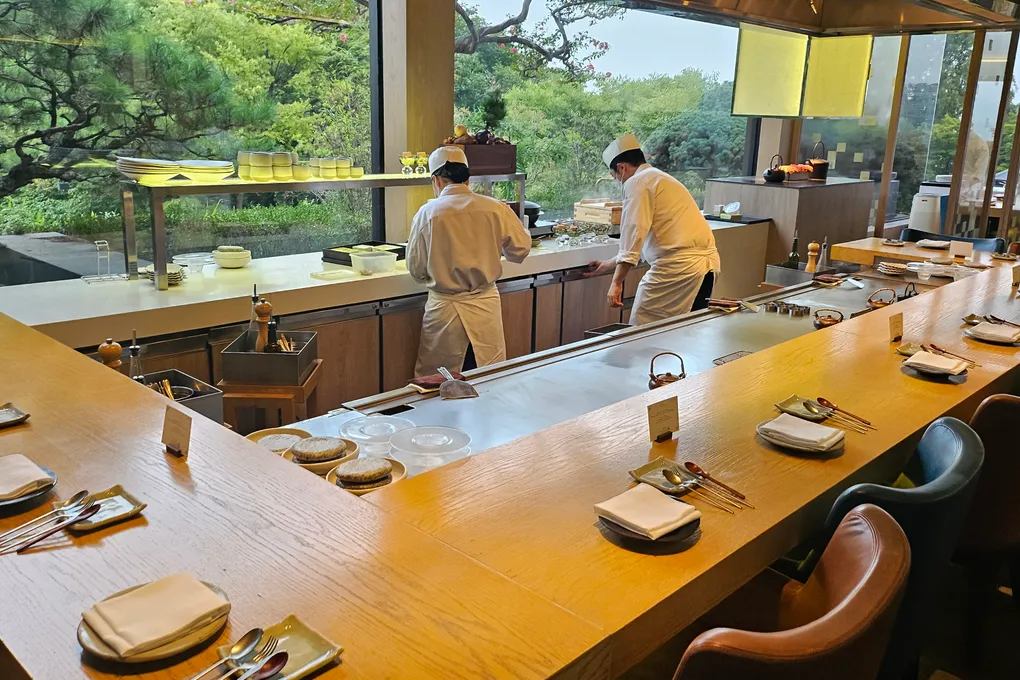
Teppan sits inside Grand Hyatt Seoul, up on the Namsan hillside in Yongsan-gu — the same stretch of the city as Itaewon and Hannam-dong. You walk in through a hotel corridor that feels like a hotel corridor, past glassware and flowers.
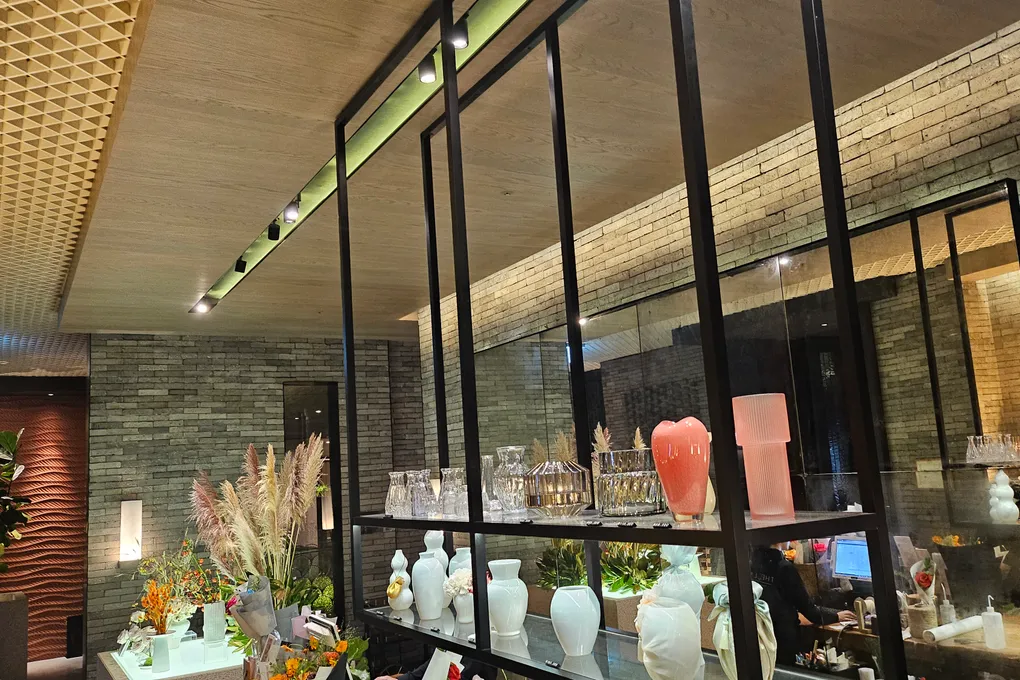
Then the room opens up, and this is where the money starts showing. Seating is a U-shaped wooden counter around the griddle, so there is no bad seat and no “table by the toilet” — everyone watches the same thing. Behind the chefs, floor-to- ceiling windows look over the hotel gardens on one side and out across Seoul on the other. You can see the outdoor pool below and the skyline stacked up behind it.
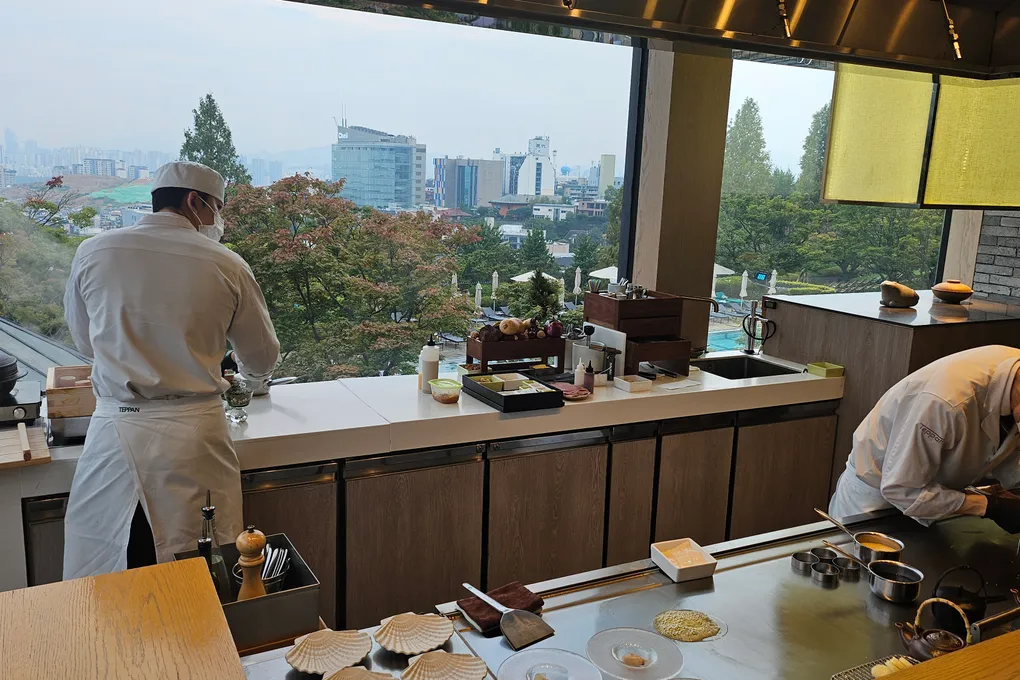
Book the 6 PM slot, and here’s why
Dinner service runs 6:00–10:00 PM. Take the 6:00 PM seating.
We sat down at six and left at eight, and in those two hours in September the room went from full daylight to complete darkness. The early courses are lit by the garden. By the time the beef comes out, the windows are black and the only light is the griddle. Nobody tells you this when you book — it’s just what happens if you eat early in autumn, and it makes a two-hour meal feel like it has three acts.
If you book at 8 PM, you get a dark room and a reflection of yourself in the glass.
Getting a table is the hard part
This is the part worth writing down, because it’s the actual obstacle for a visitor.
Reservations are on Naver, and they open about two months ahead. Not a week. Not “call the hotel that morning.” Two months, and the good slots move fast. I booked mine in advance and would not have gotten in otherwise.
If you don’t read Korean or don’t have a Korean phone number, Naver reservation is genuinely awkward — this is the single biggest barrier between a foreign visitor and this restaurant, more than price. Give yourself time, or have someone local book it.
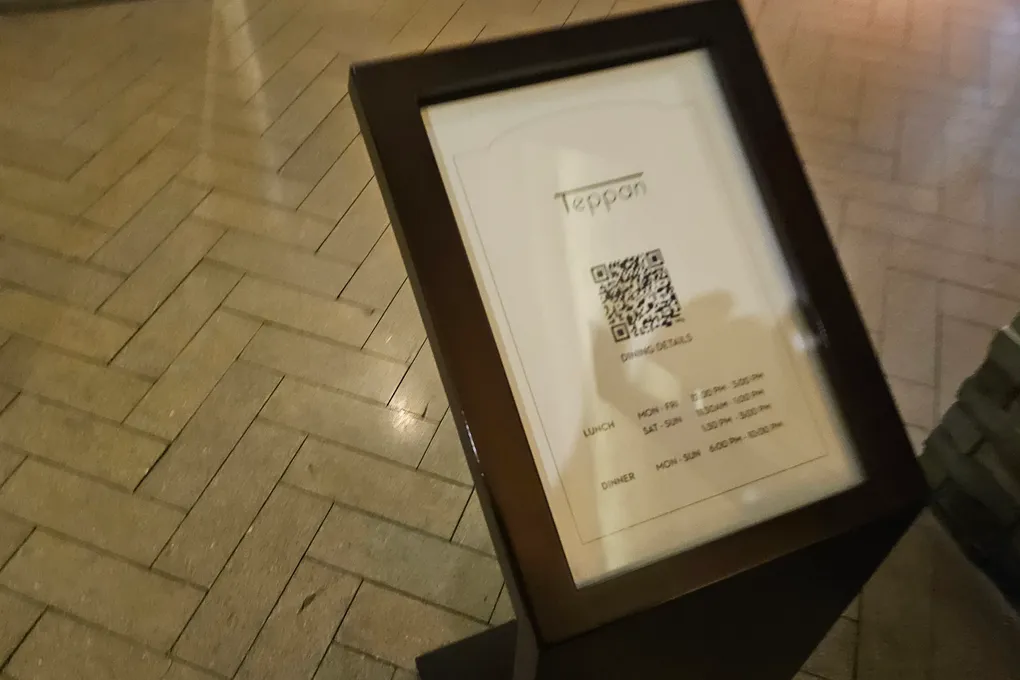
As posted at the door when I visited:
| Service | Days | Hours |
|---|---|---|
| Lunch | Mon–Fri | 12:00 PM – 3:00 PM |
| Lunch | Sat–Sun | 11:30 AM – 1:00 PM, 1:30 PM – 3:00 PM |
| Dinner | Mon–Sun | 6:00 PM – 10:00 PM |
Note that weekend lunch runs in two seatings — an 11:30 and a 1:30. That’s a timed turnover, so don’t plan a three-hour lunch.
What ₩260,000 gets you
The course is built around what’s in season, and in September that meant autumn. Before anything was cooked, they set out a box of the ingredients: a squash, a lion’s mane mushroom, chestnuts, walnuts, peanuts, dried dates, a purple eggplant — and a tin of caviar sitting on top, in case the point wasn’t clear.
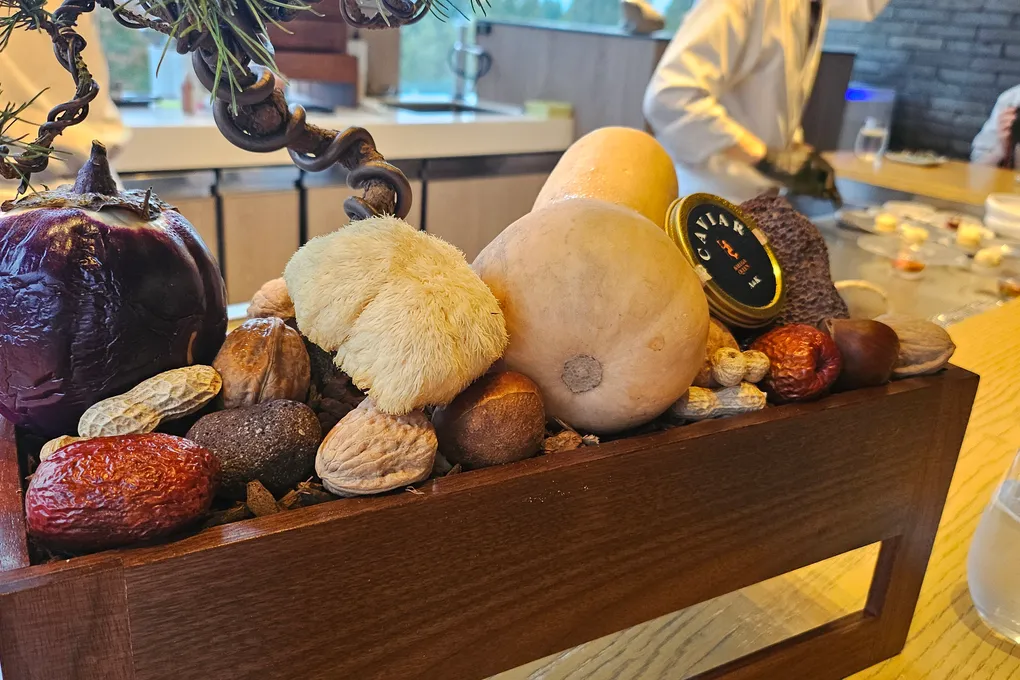
It’s a bit of theatre, but it’s honest theatre — almost everything in that box turned up on a plate later.
The opening run
The first stretch is small, cold, and precise: bites plated on ceramic scallop shells, then a series of tiny courses on glass and stoneware. The chefs plate these directly in front of you, which means you watch your own food being assembled.
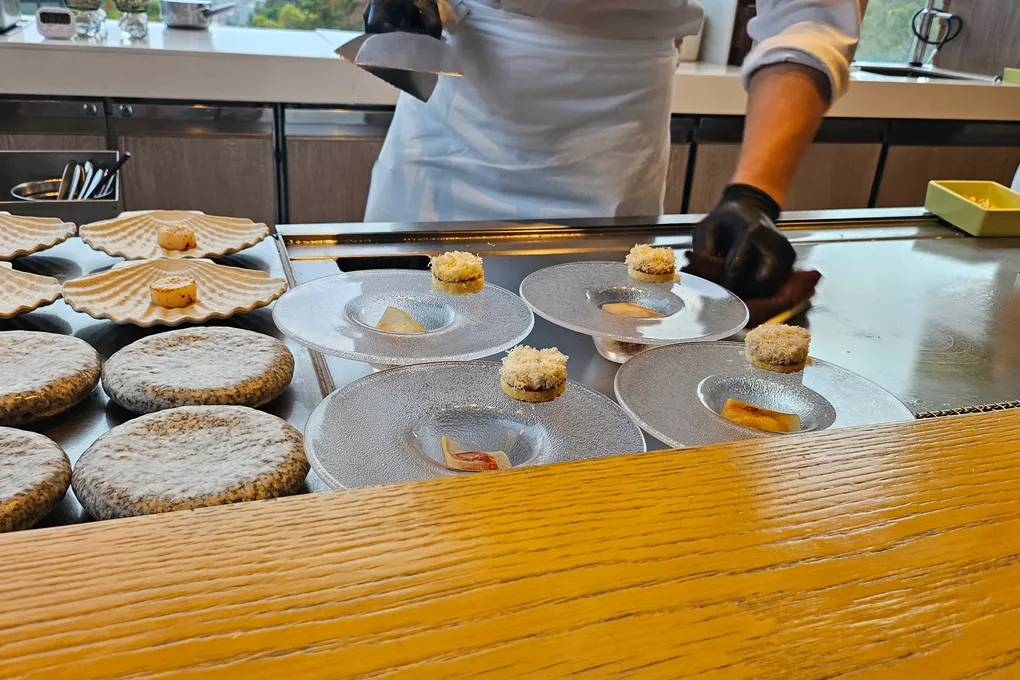
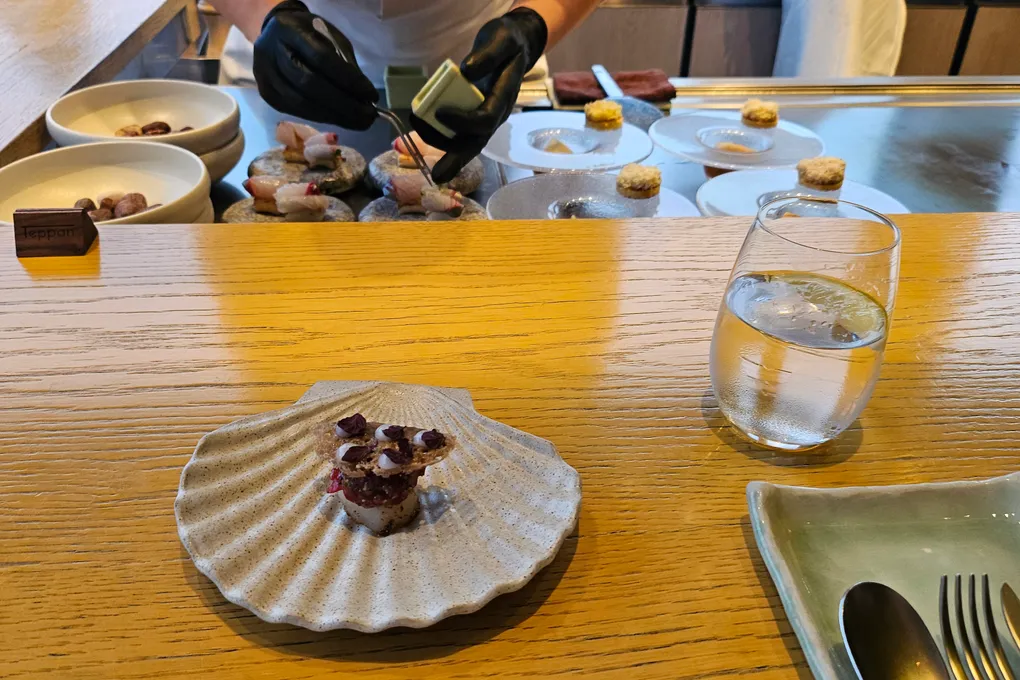
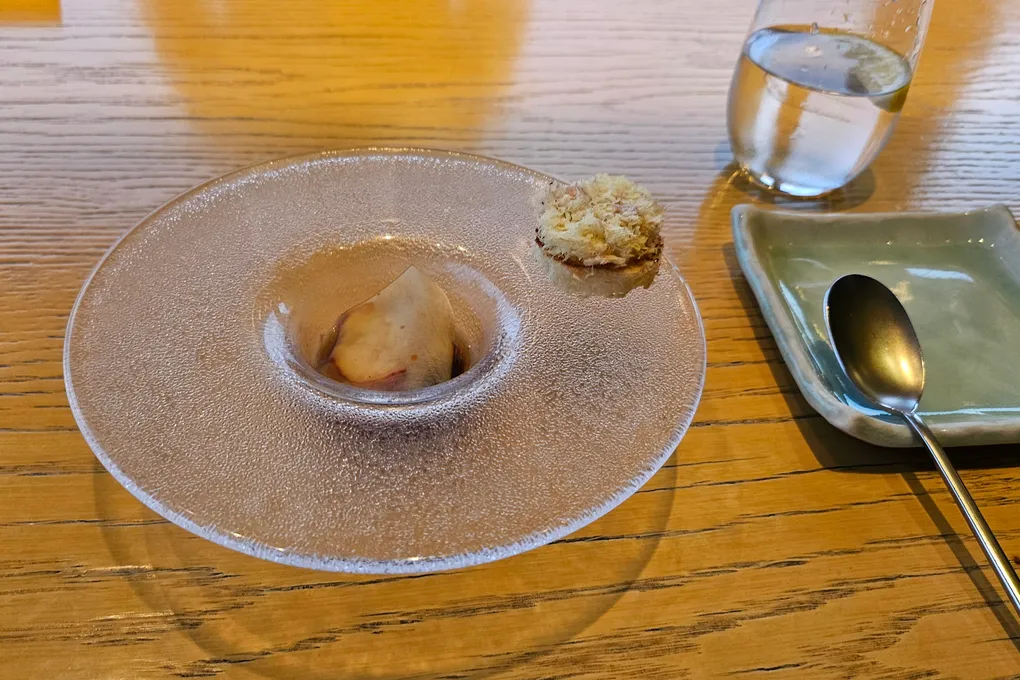
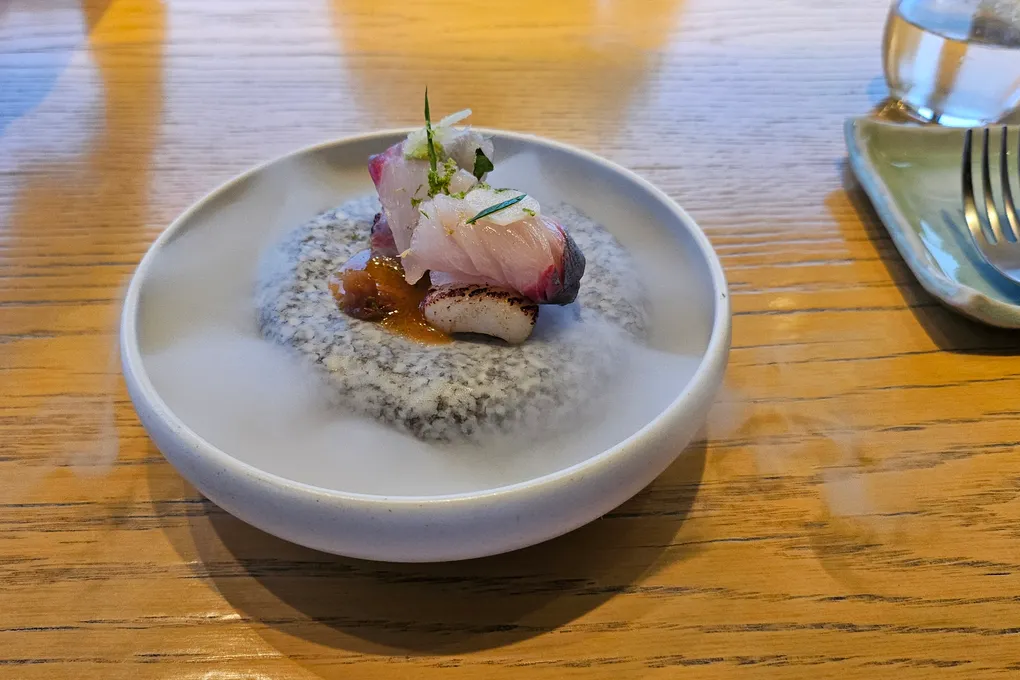
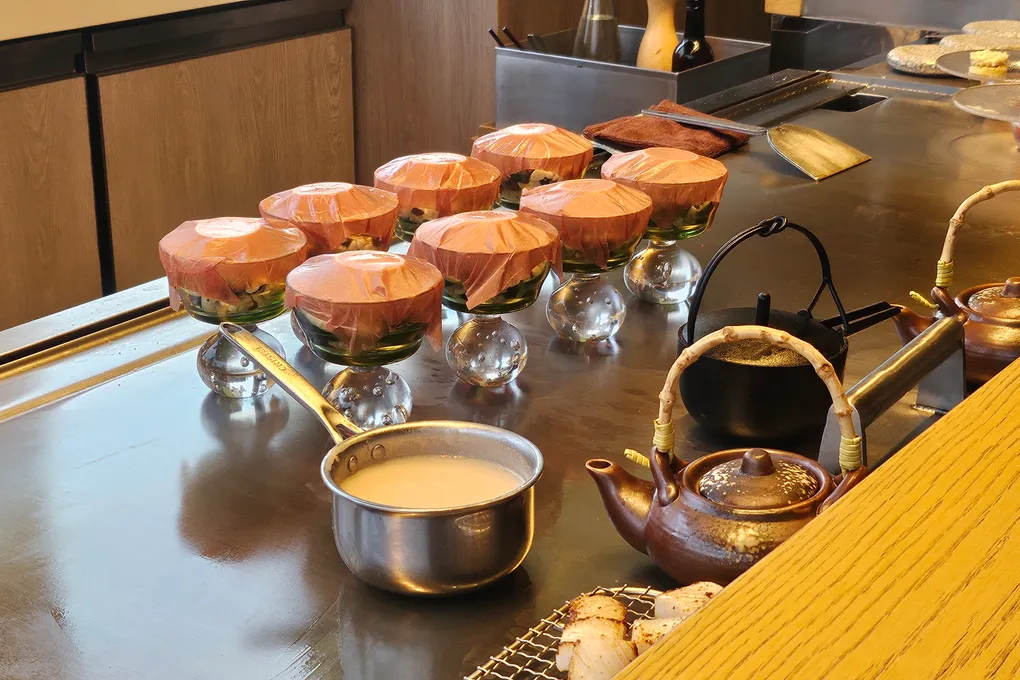
Then something I wasn’t expecting at a griddle restaurant: small glass vessels sealed with paper lids, set out on the teppan alongside copper and cast-iron kettles, with a pan of pale sauce working beside them.
Caviar, salt, and steam
The caviar arrives as a tin on ice — Perseus — spooned onto a fish course in deep blue bowls.
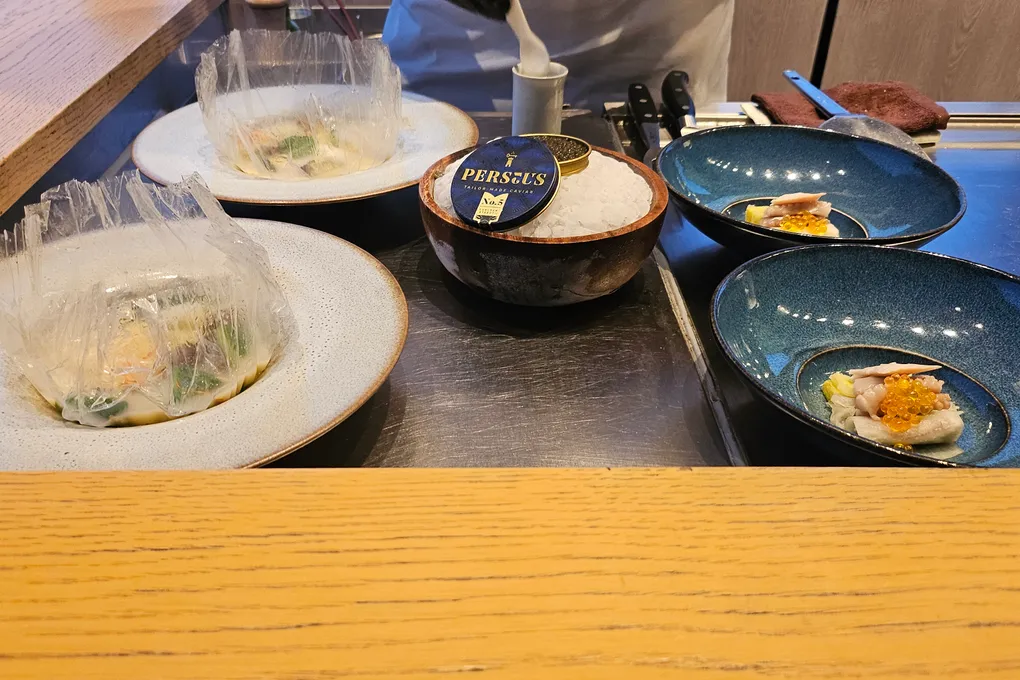
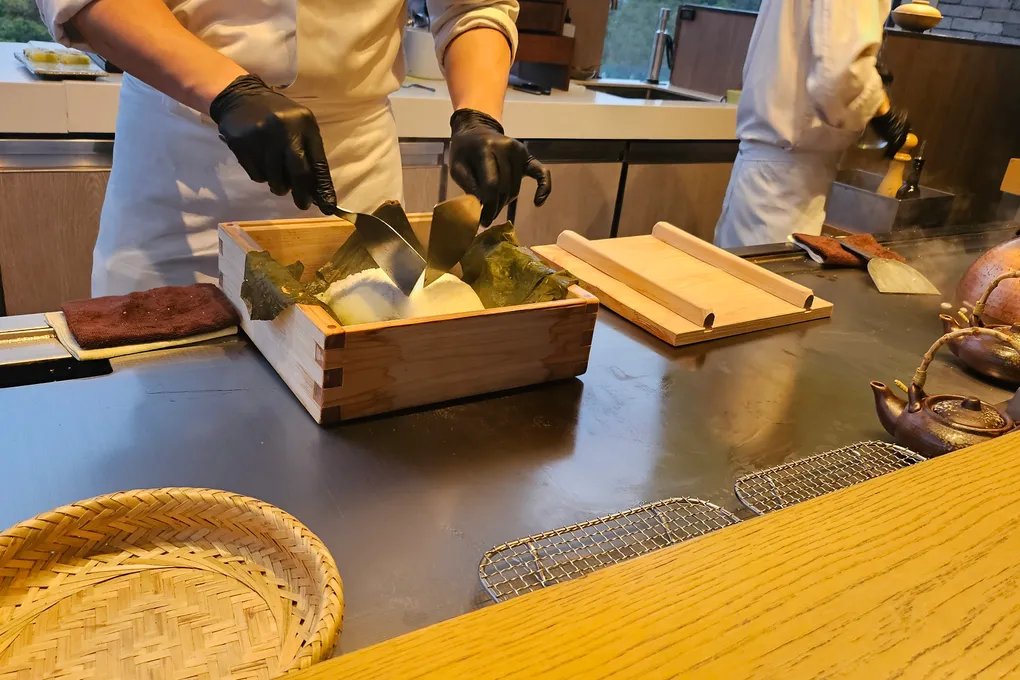
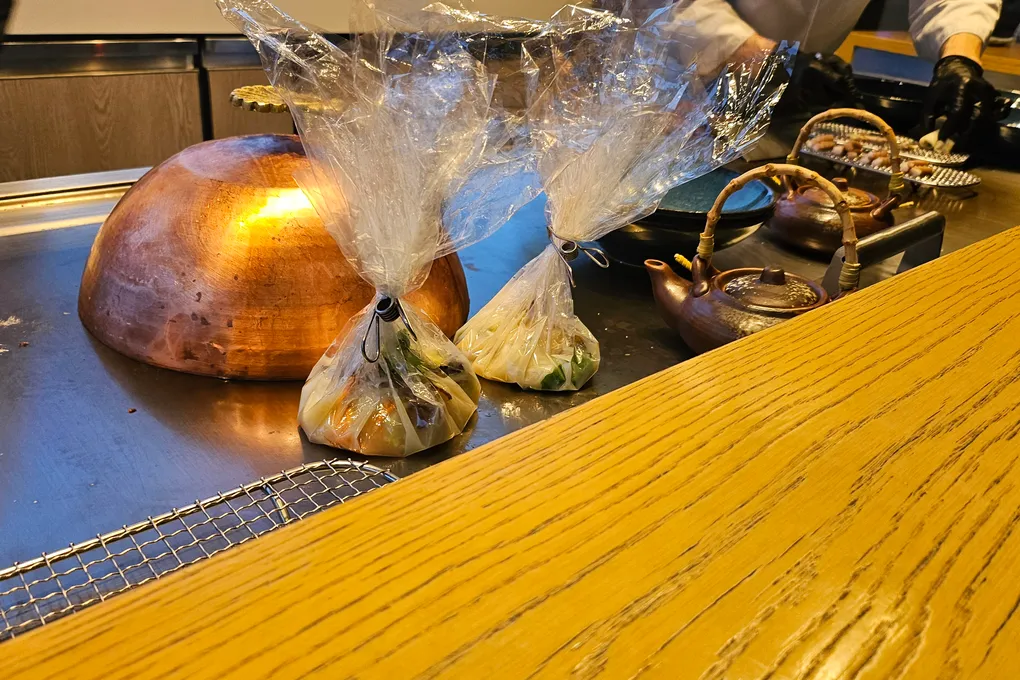
Two of the more theatrical courses came next. First a wooden box packed with salt and kombu leaves, opened and worked at the counter. Then parcels sealed in cellophane, steamed under a copper dome right on the griddle.
Sea urchin, beef, fire
By this point the windows had gone dark, and the cooking got louder.
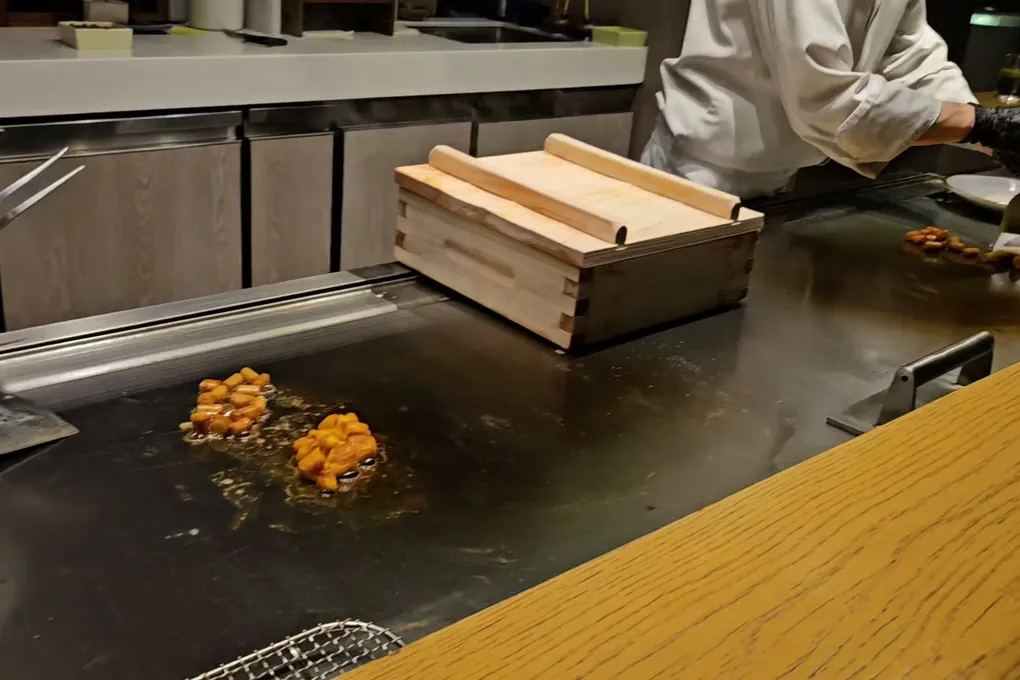
Sea urchin went straight onto the griddle — a genuinely unusual thing to see seared rather than served raw.
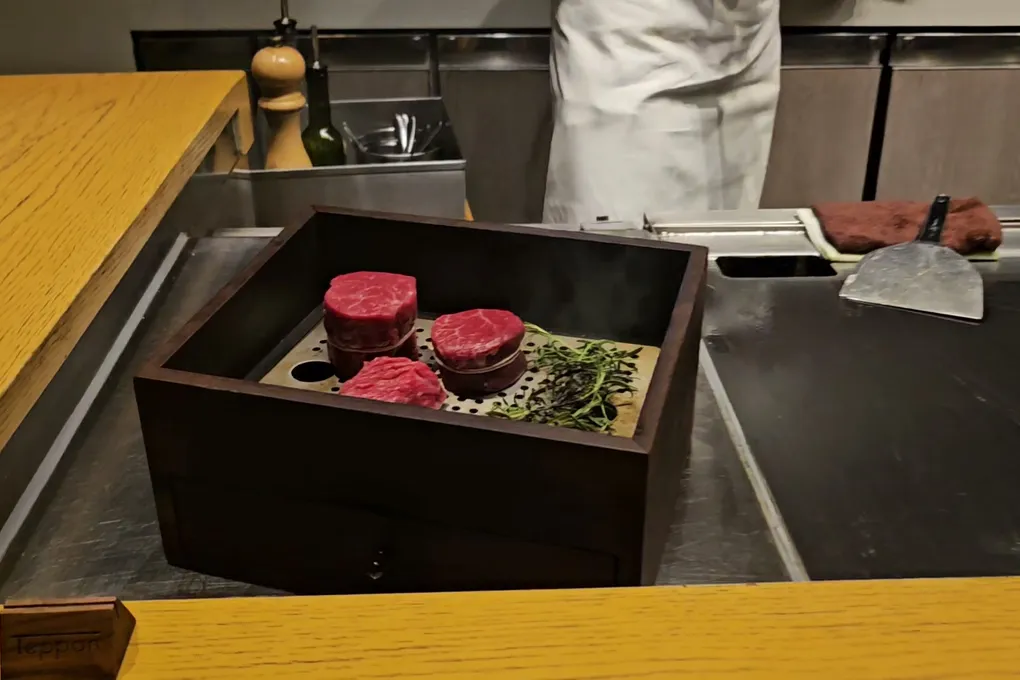
The beef was presented raw first, in a smoking wooden box on a bed of herbs, before it went anywhere near the heat.
And then, the one moment that is pure teppanyaki spectacle:
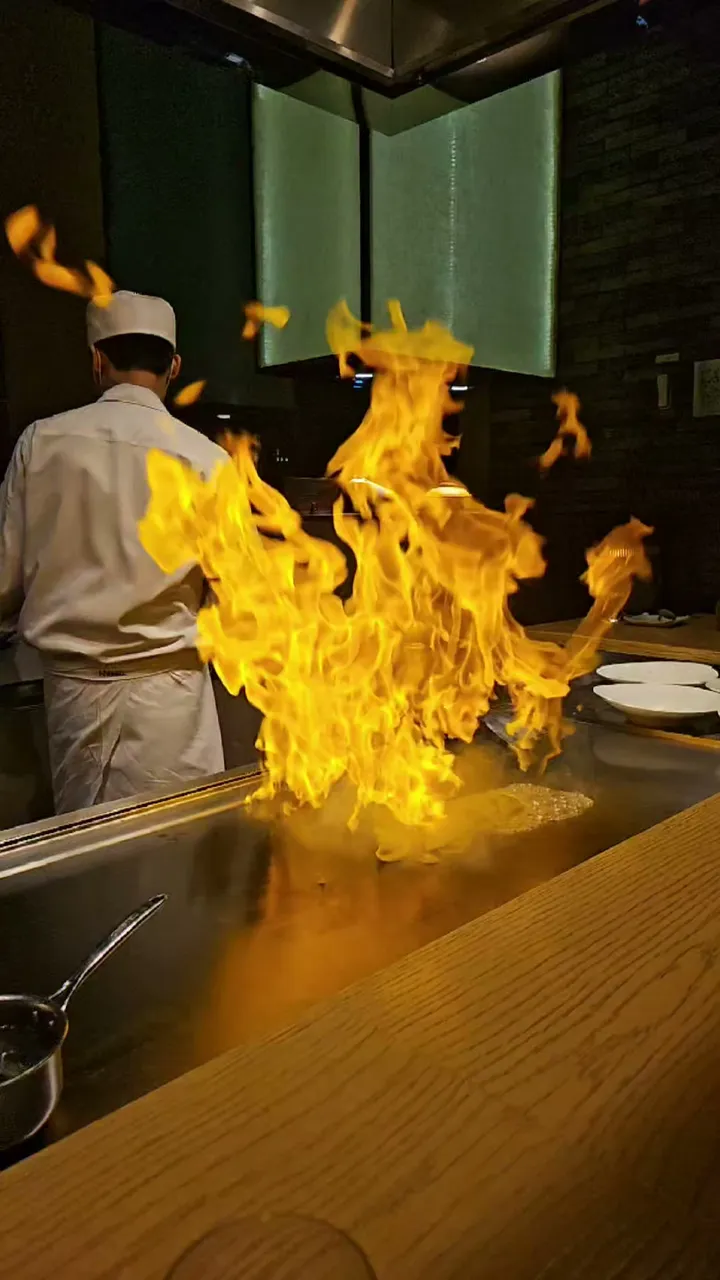
It’s brief, it’s loud, and it’s the only time all evening the restaurant stops being quiet. After two hours of tweezers and paper lids, it lands.
The one thing I’d flag
You can’t get in early. We were only let into the restaurant about five minutes before our reservation time — no earlier. If you show up at 5:40 for a 6:00 booking, expect to stand around in the hotel rather than sit down with a drink.
At ₩260,000 a head, being kept outside your own reservation feels petty. It’s a small thing, and it clearly exists so the room can be reset cleanly between seatings — but nobody warns you, and it’s worth knowing so you time your arrival instead of your departure from home.
Is it worth ₩260,000?
Honestly: it depends what you want from the money.
If you want to be fed, there are cheaper ways to eat extremely well in Seoul. This is a hotel fine-dining price, and the portions are tasting-menu portions.
If you want an occasion — a birthday, an anniversary, a last night in Seoul — then the combination of the counter, the garden-to-skyline light change, and two chefs working an arm’s length away is hard to get anywhere else in the city at any price. The room does something a restaurant with a closed kitchen simply cannot.
I’d go back. I’d book the 6 PM slot again, in autumn again, and I’d arrive at 5:55.
Before you go
- Book on Naver about two months ahead. This is the real barrier, not the price.
- Take the 6:00 PM dinner seating in autumn for the daylight-to-dark transition.
- Arrive five minutes before, not early — you won’t be let in.
- Budget ₩260,000 per person for the course, plus drinks.
- Weekend lunch is a two-seating system (11:30 and 1:30), so it’s a timed meal.
Visited September 2026. Prices, hours, and the seasonal menu change — confirm with Grand Hyatt Seoul before you go. I paid for my own meal and this post isn’t sponsored.
Frequently asked questions
How much is dinner at Teppan, Grand Hyatt Seoul?
I paid ₩260,000 per person for the holiday dinner course in September 2026, before drinks. Prices change with the season, so confirm when you book.
How do I book Teppan at Grand Hyatt Seoul?
I booked through Naver reservation. Bookings open about two months in advance and the good slots go quickly, so put a reminder in your calendar rather than trying a week before.
What time should I book for the view?
The 6:00 PM dinner slot. In September the room is still in daylight when you sit down and fully dark by the time the beef comes out, so you get the garden, the Seoul skyline, and the night view in one meal.
Can I arrive early at Teppan?
Not really. We were only let in about five minutes before our reservation time, so there is no lounge-around-first option. Plan to arrive just before, not early.
What are Teppan's opening hours?
As posted at the entrance when I visited: lunch Mon–Fri 12:00–3:00 PM, Sat–Sun 11:30 AM–1:00 PM and 1:30–3:00 PM, dinner daily 6:00–10:00 PM. Confirm with the hotel before going.
Where is Teppan located?
Inside Grand Hyatt Seoul, on the Namsan hillside in Yongsan-gu — the same area as Itaewon and Hannam-dong.