What to Buy at a Korean Convenience Store: A First-Timer's Guide
If you’re visiting Korea, here’s the advice I give every friend: go to a convenience store on your first night. Not as a backup — as a plan.
Korean convenience stores (we call them pyeonuijeom) are a genuine highlight of the country: open 24/7, absurdly cheap, and stocked with hot meals, fresh snacks, and drinks you can’t get anywhere else. You can eat a full, satisfying meal for under ₩5,000 (about $3.50). For this guide I walked through a CU in Itaewon — Seoul’s most international neighborhood — to show you exactly what’s worth grabbing.
The three big chains you’ll see everywhere are GS25, CU, and 7-Eleven. They’re roughly 90% similar, so for your first trip don’t overthink which one you walk into. This guide covers what’s good across all of them.
How a Korean convenience store actually works
A few things surprise first-timers:
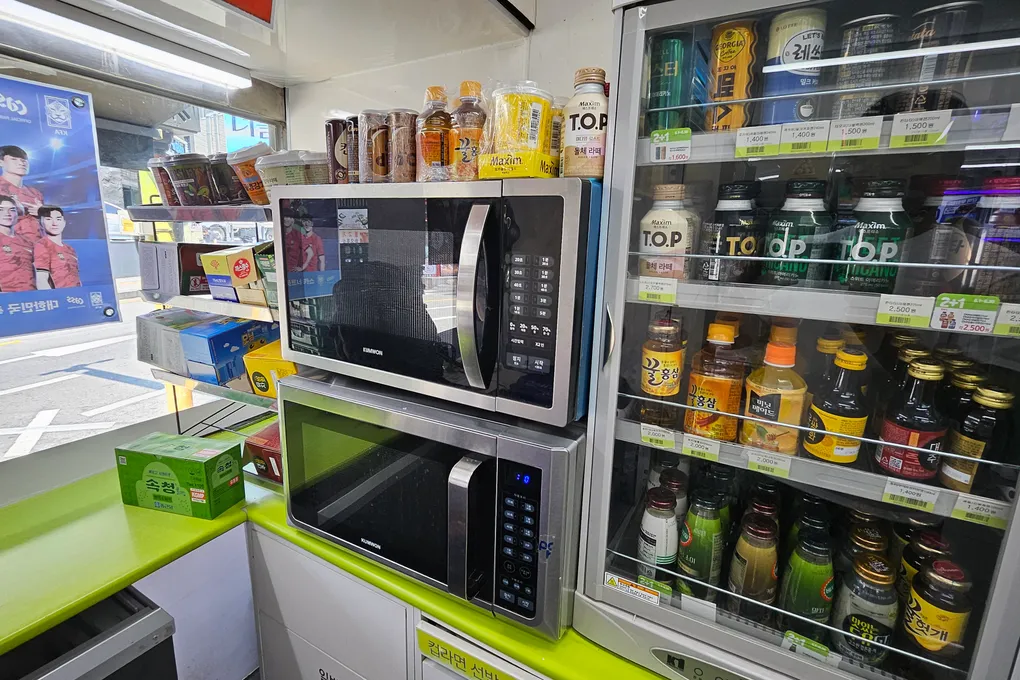
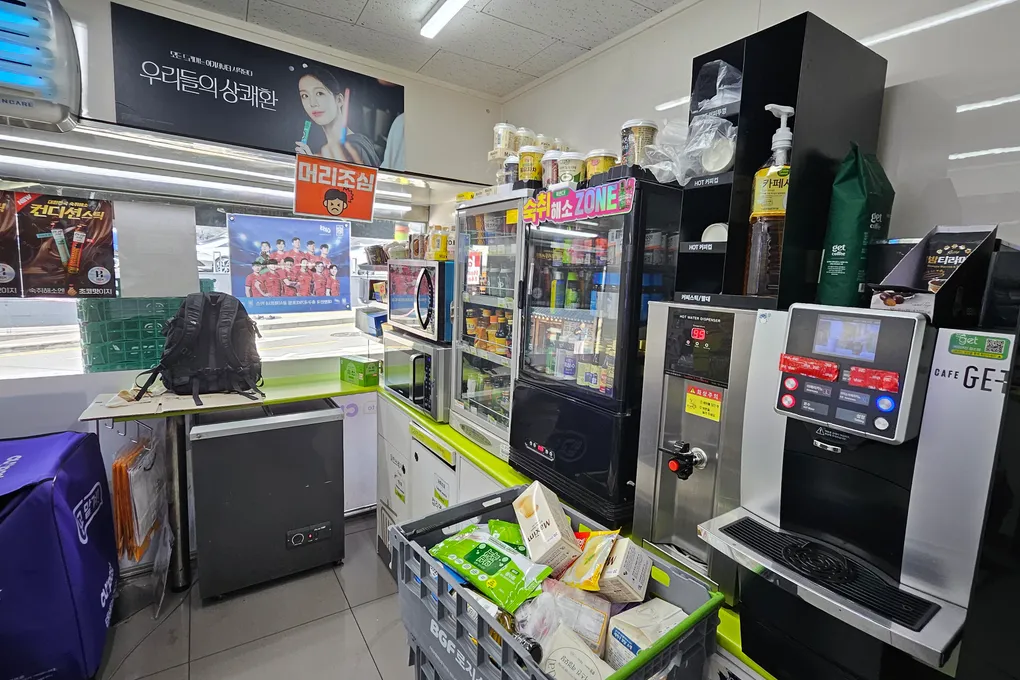
- You can heat food in the store. There’s a microwave (often two) and usually a hot-water dispenser for cup noodles, free to use.
- There’s often a place to sit — a counter or outdoor tables. Eating in is normal, not rude.
- Pay with a card or phone. Almost everywhere takes foreign cards and contactless; a T-money transit card works as a payment card too.
- It’s open all night.
Now, the good stuff — by category.
1. Instant ramen (the obvious first move)
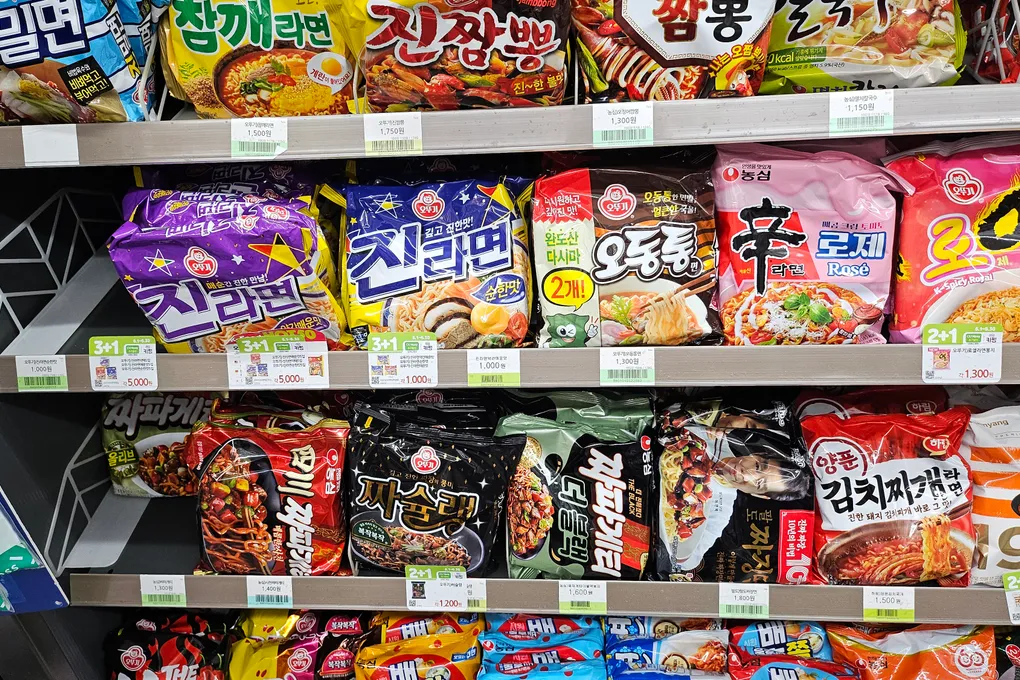
The wall of instant noodles is the heart of any convenience store. Cups cost roughly ₩1,000–1,800: fill with hot water, wait 3–4 minutes, done.
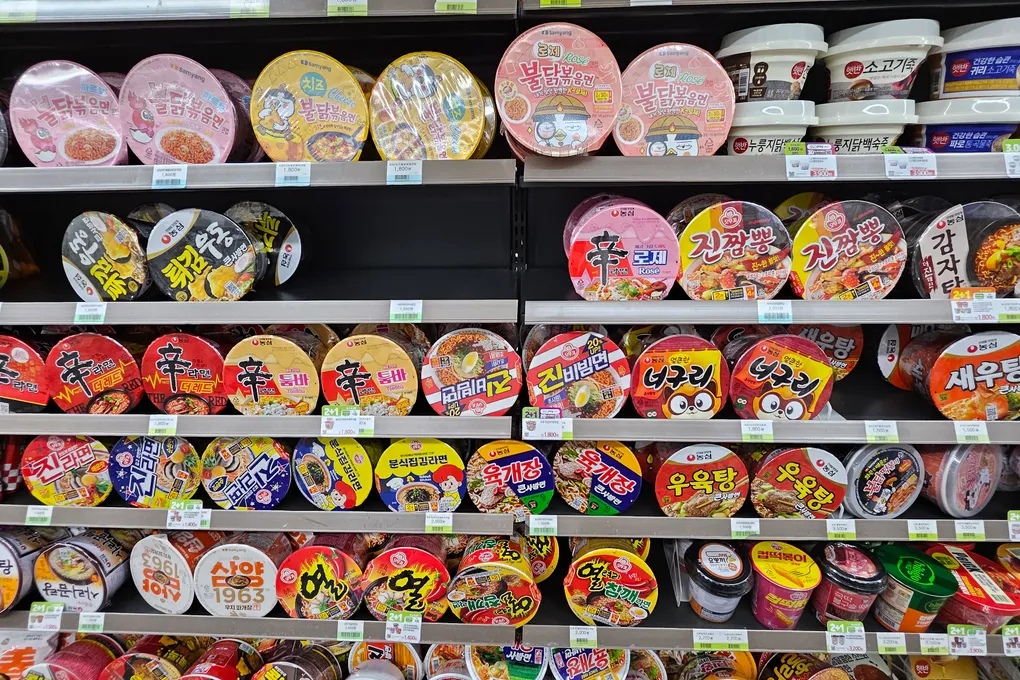
For a first try, look for Shin Ramyun (the classic spicy beef-ish broth), Buldak (Hot Chicken) — the famous “fire noodle,” with a milder carbonara version — and Chapagetti (Korea’s savory black-bean noodles, not spicy).
2. Triangle kimbap (samgak-gimbap)
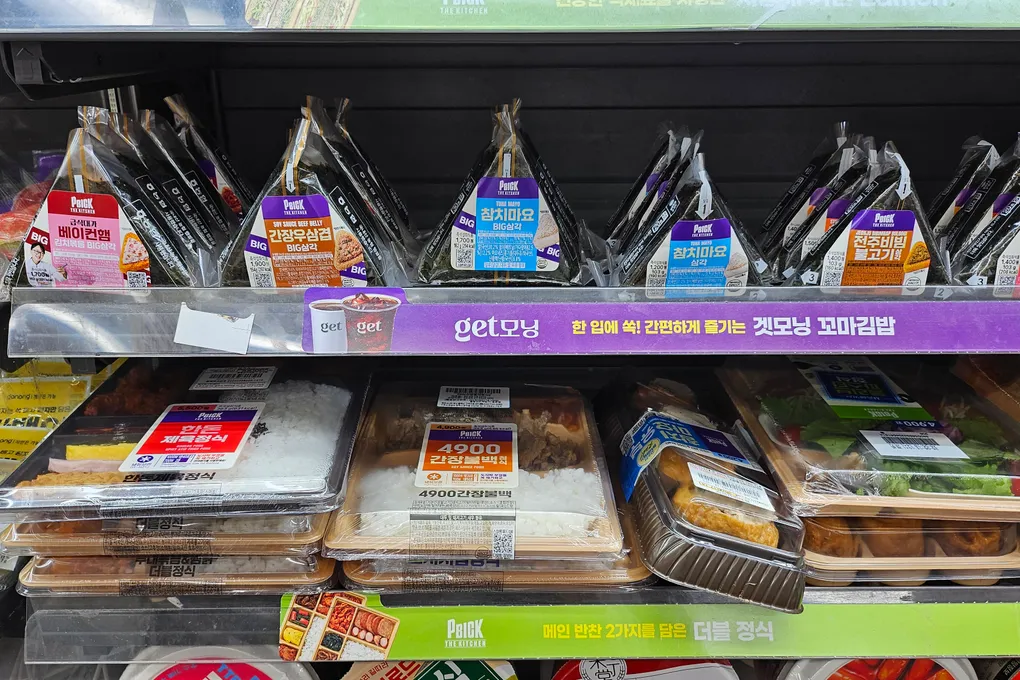
These foil-wrapped rice triangles are the perfect cheap snack — rice with a filling, wrapped in crisp seaweed. Tuna-mayo (chamchi-mayo) is the gateway flavor. Around ₩1,000–1,500 each. There’s a little trick to opening them: follow the numbered 1-2-3 on the wrapper so the seaweed stays crunchy.
3. Lunchboxes (dosirak)
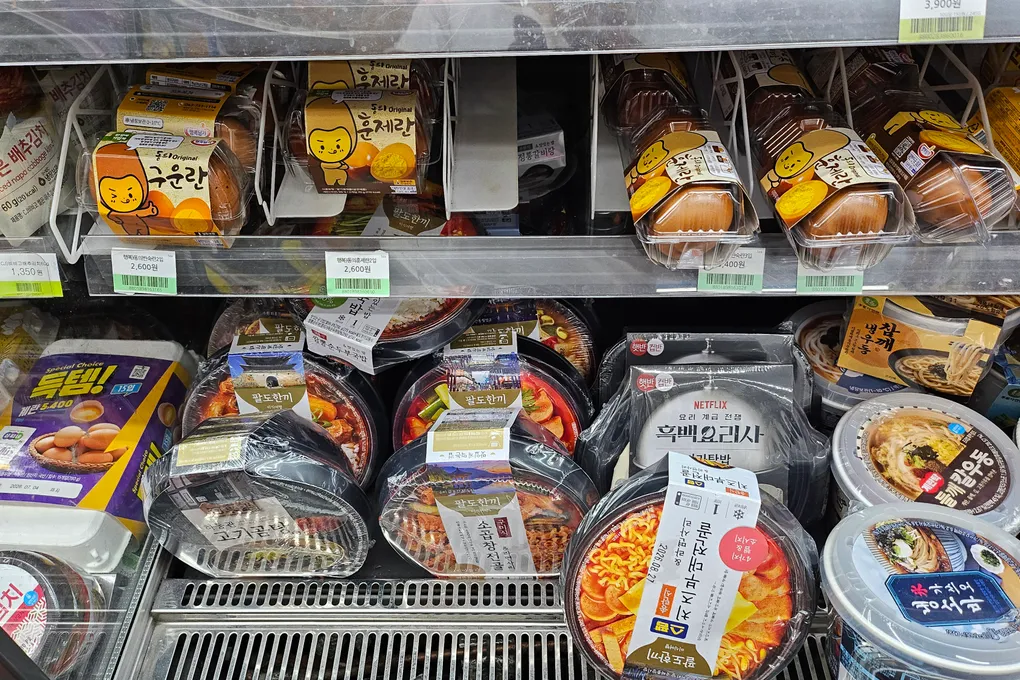
If you want an actual meal, grab a dosirak. These chilled lunchboxes pack rice, a protein, and several Korean side dishes — then you microwave the whole thing. Shockingly good for ₩3,500–5,000 (I spotted one at ₩4,900).
4. Drinks you should try
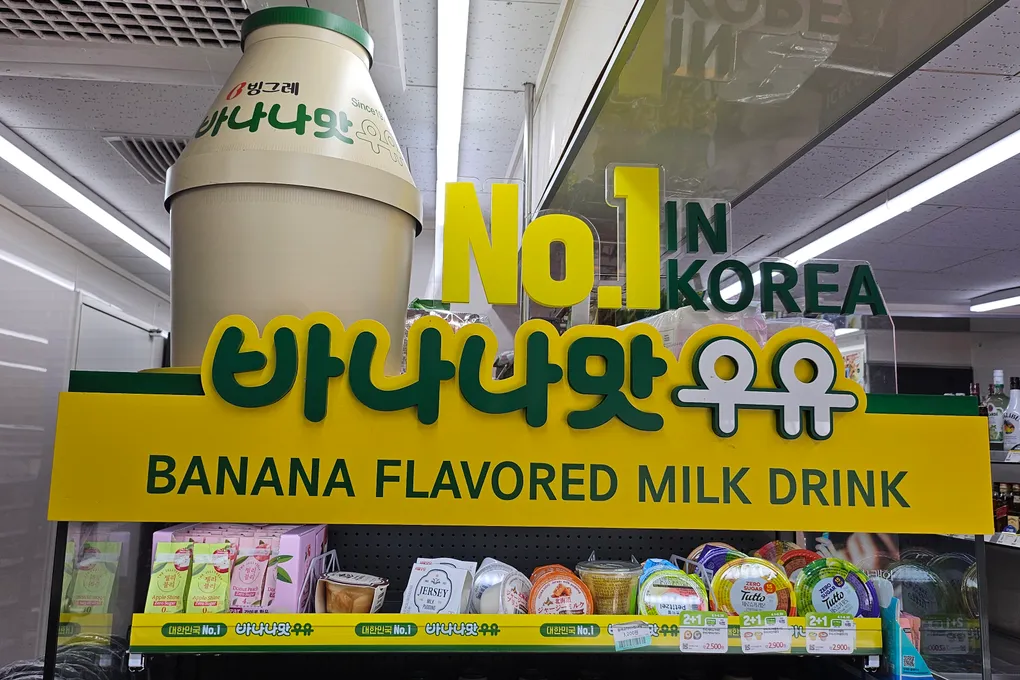
Start with banana milk — a national institution in a little pot-bellied bottle. CU even gives it its own English-labeled display, which tells you how beloved it is.
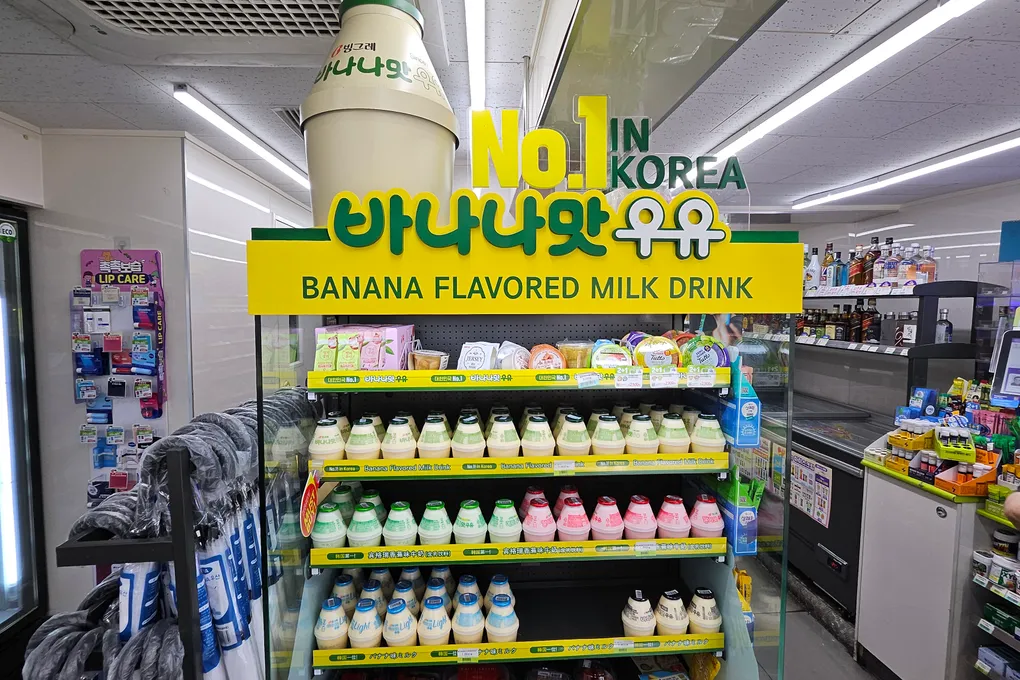
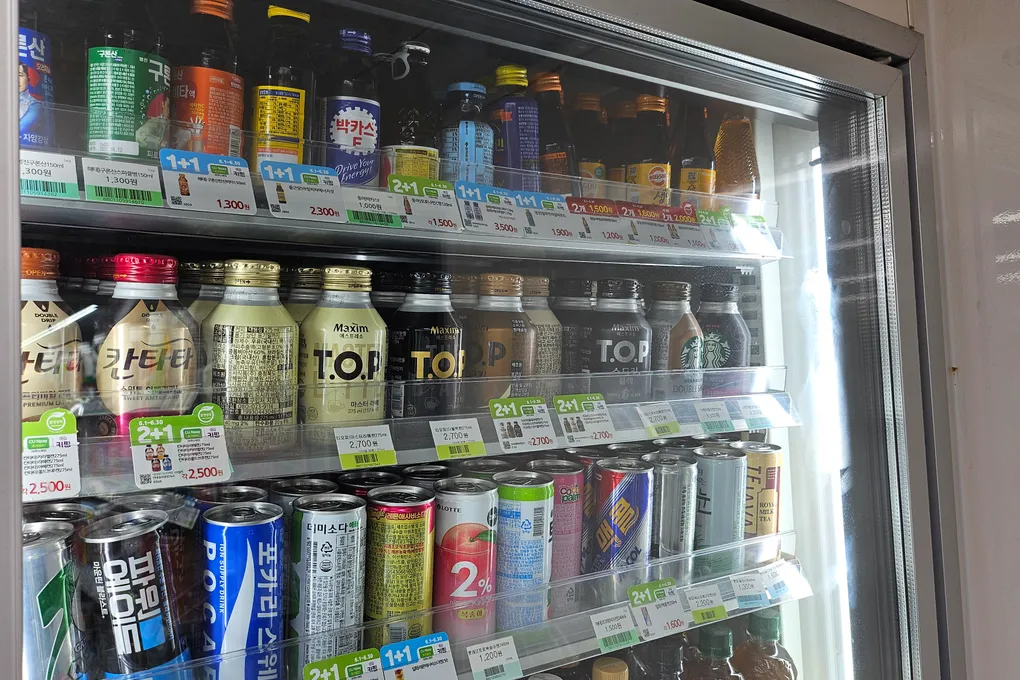
Beyond that, the drinks fridge is huge: sikhye (sweet rice punch), Pocari Sweat, vitamin drinks, protein drinks, and endless teas. Most run ₩1,000–2,000.
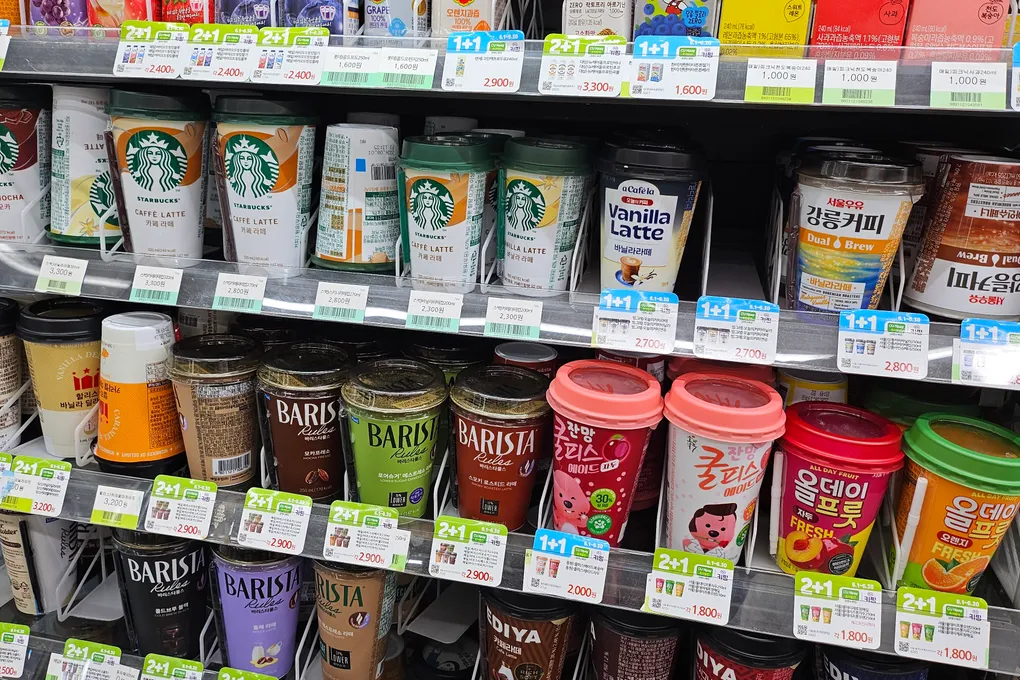
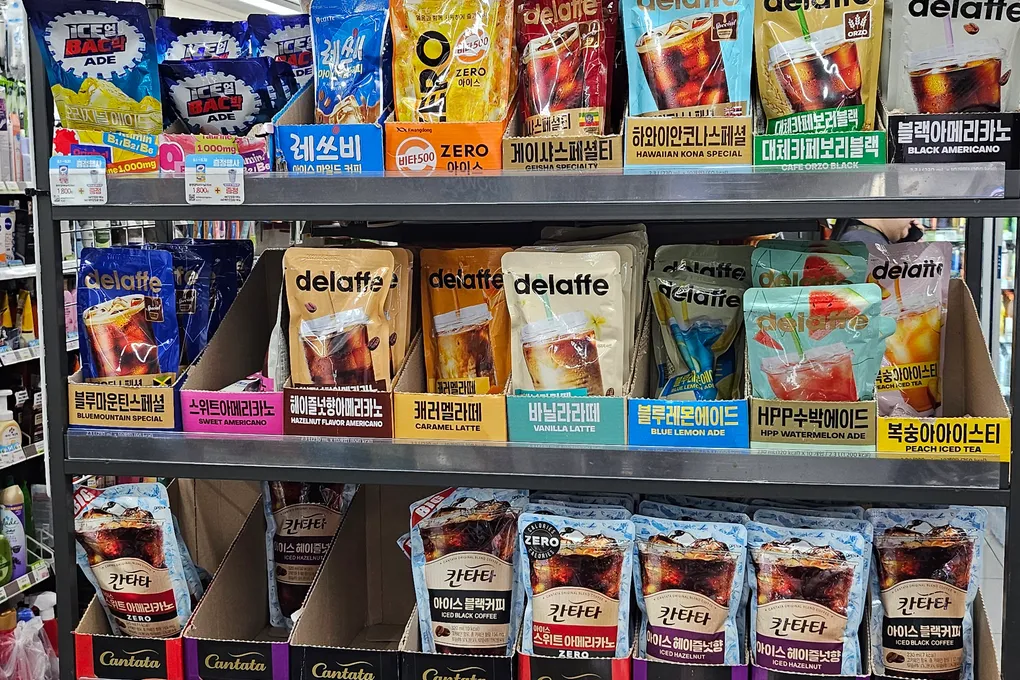
Don’t sleep on the cup coffee either — Starbucks, Barista, and Korean brands, cold and ready to go.
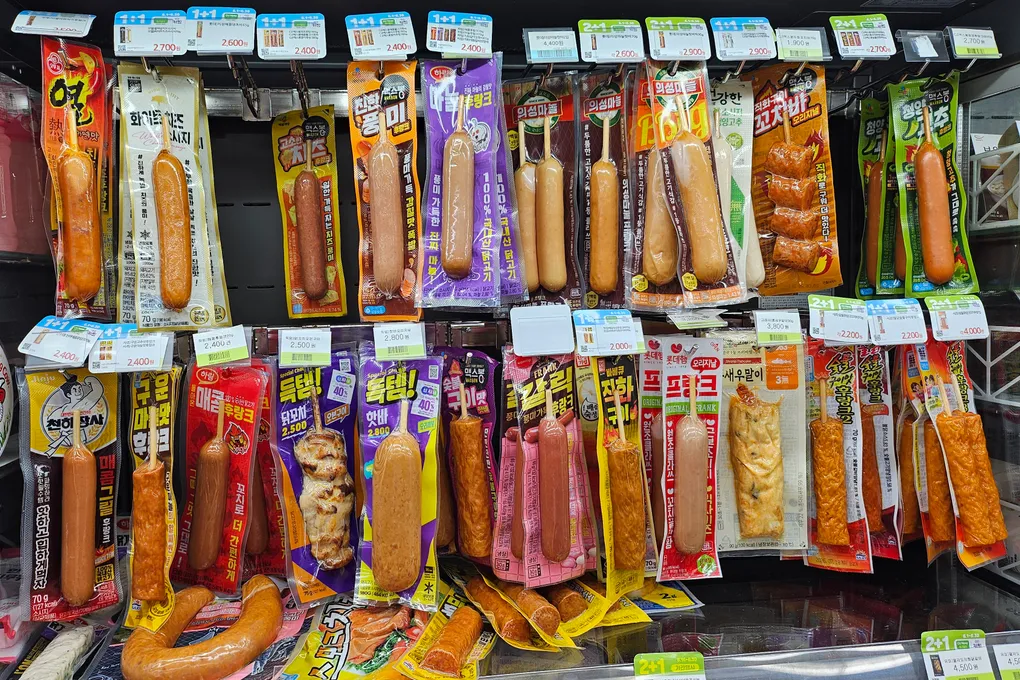
5. Hot snacks & sausages
Near the counter you’ll find skewered sausages, hotbar (a sausage-and-fish-cake stick), and fish cakes — cheap, hot, and perfect while your noodles cook.
6. Bread, desserts & snacks
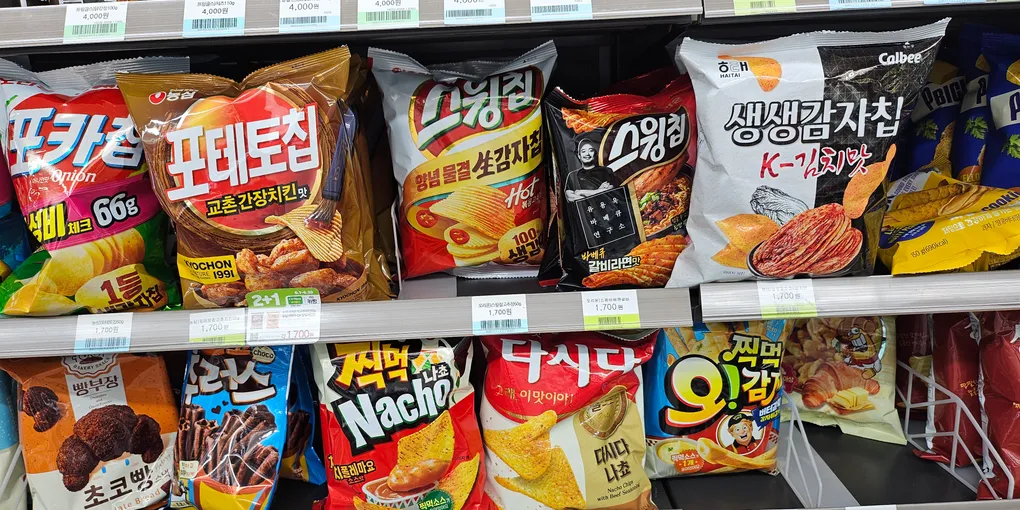
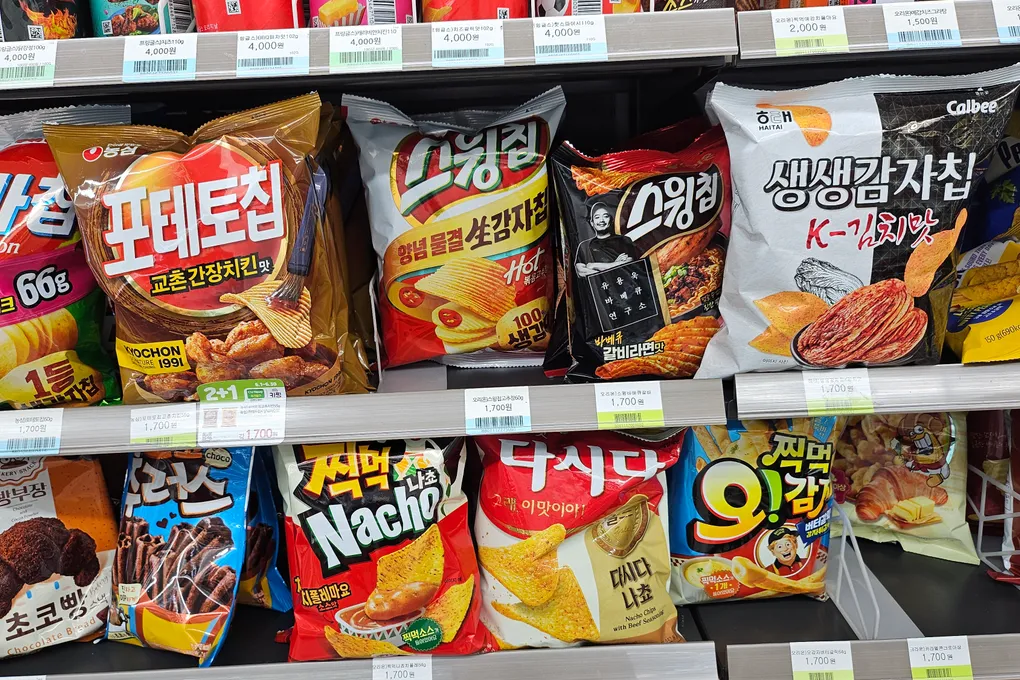
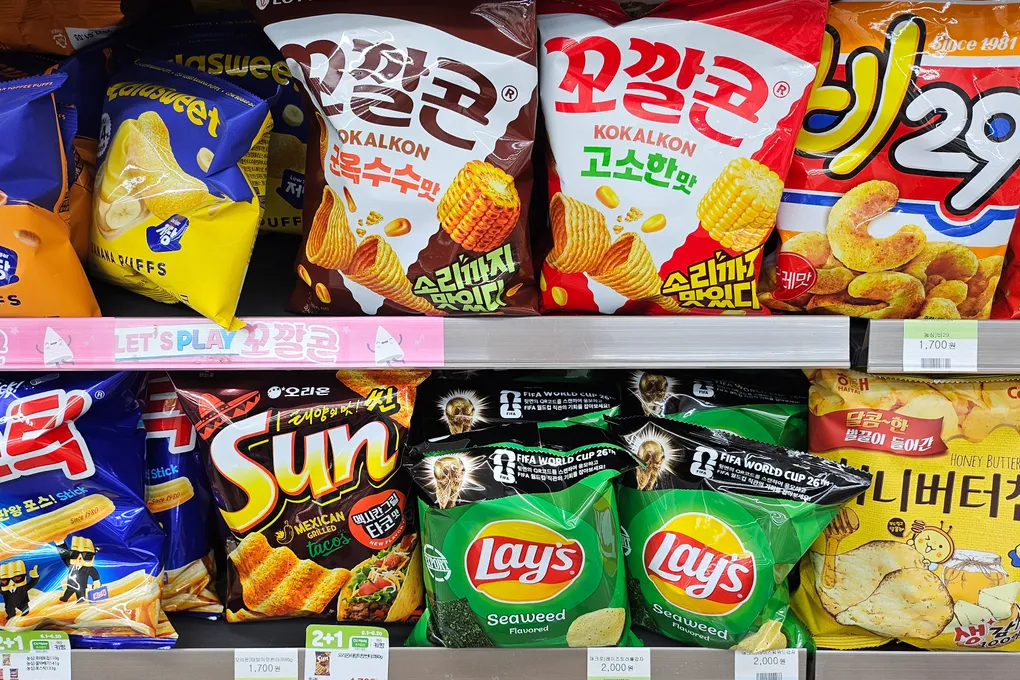
The snack aisle is dangerous (in a good way): Korean chips like honey-butter and seaweed Lay’s, chocolate, and sweet breads.
7. Alcohol (yes, it’s right there)
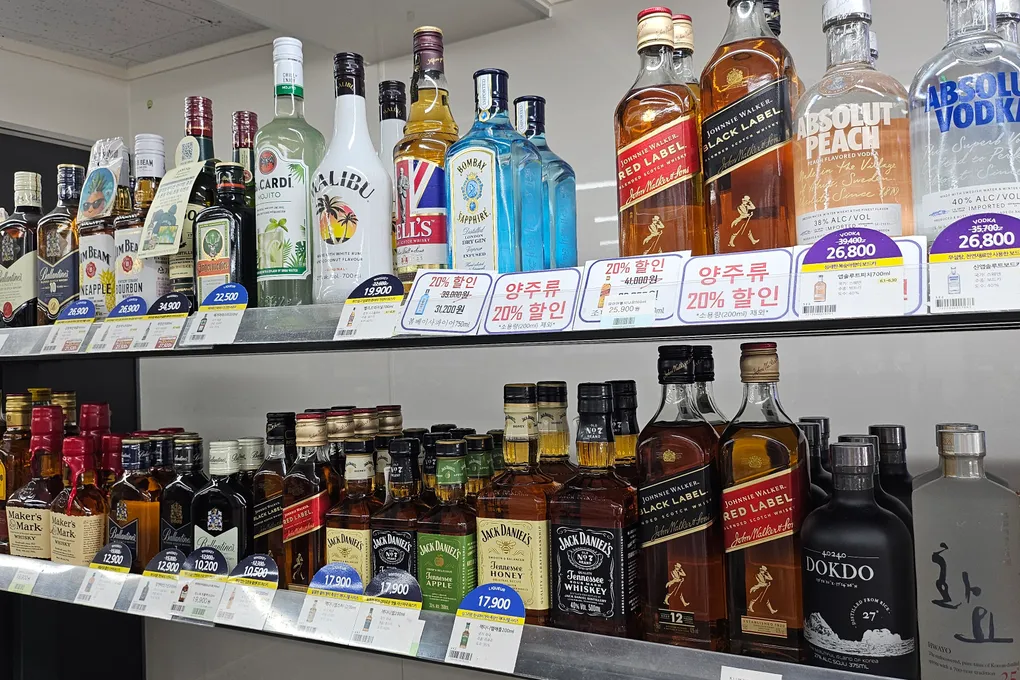
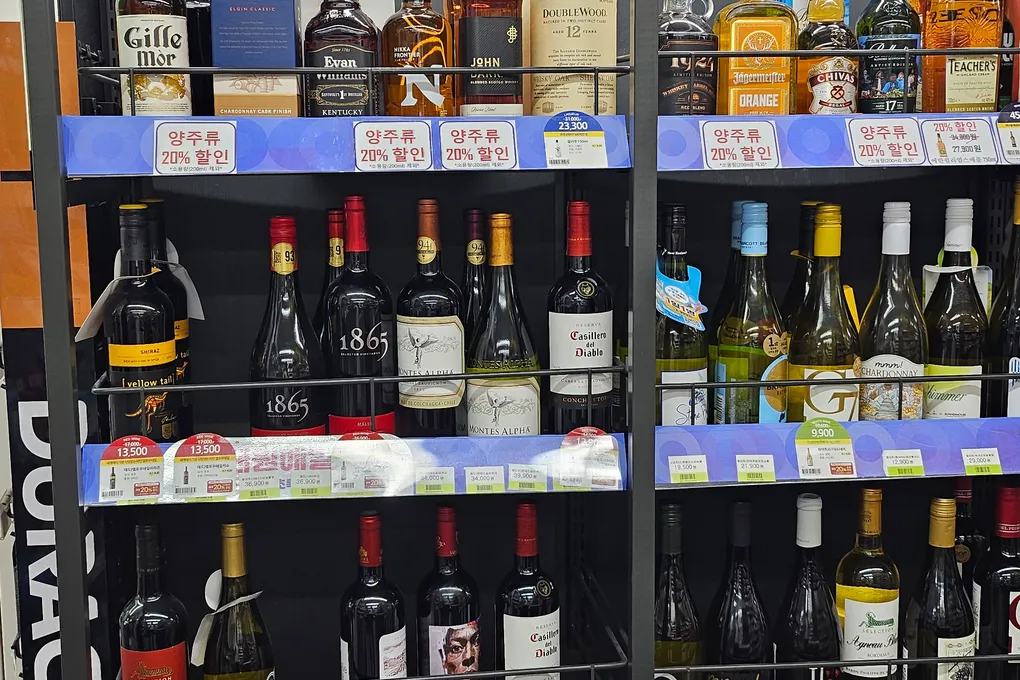
Convenience stores are where Koreans grab drinks for a casual night. Beyond soju (~₩1,900) and beer, this CU had a surprisingly deep wall of whisky and spirits (often discounted) and a dedicated wine section (“CUBAR”) — handy in a neighborhood like Itaewon.
You’ll need ID (drinking age is 19). Note that drinking in some public areas is fine here, which surprises a lot of visitors.
How to pay & eat in
Tap a card or phone, or use self-checkout (usually with an English option). Then heat your food at the microwave and eat at the counter or outside.
A rough first-night haul — a lunchbox, a cup of ramen, a banana milk, and a triangle kimbap — comes to about ₩7,000–9,000 (~$5–6).
GS25 vs CU vs 7-Eleven — which one?
For everyday snacks they’re close enough that you can just walk into whichever is nearest. The fun is in each chain’s exclusive products — that’s where they really differ. I’ll break those down in separate posts.
The bottom line
A Korean convenience store is cheap, open all night, and genuinely delicious. On your first night, grab a lunchbox, a cup of ramen, and a banana milk, heat it all up, and eat it right there. It’s one of the easiest, most fun introductions to everyday life in Korea — and you’ll probably be back the next night.
Frequently asked questions
Can I eat inside a Korean convenience store?
Yes. There's a free microwave and usually a hot-water dispenser, plus a counter or outdoor seating. Heating up food and eating in is completely normal.
Do Korean convenience stores take foreign cards?
Almost all take foreign cards and contactless payment, and there's usually a self-checkout with an English option. A T-money transit card also works as a payment card.
What should a first-timer buy?
A lunchbox (dosirak), a cup of ramen, and a banana milk. Heat the first two and you've got a full meal for under ₩9,000 (about $6).
Are Korean convenience stores open 24 hours?
Most are open 24/7 — perfect for jet lag, late arrivals, and 2 a.m. cravings.
GS25 vs CU vs 7-Eleven — which is best?
They're about 90% the same for everyday items. The fun is in each chain's exclusive products; for a first visit, just go to whichever is nearest.